You open your phone and suddenly see a message that simply says:
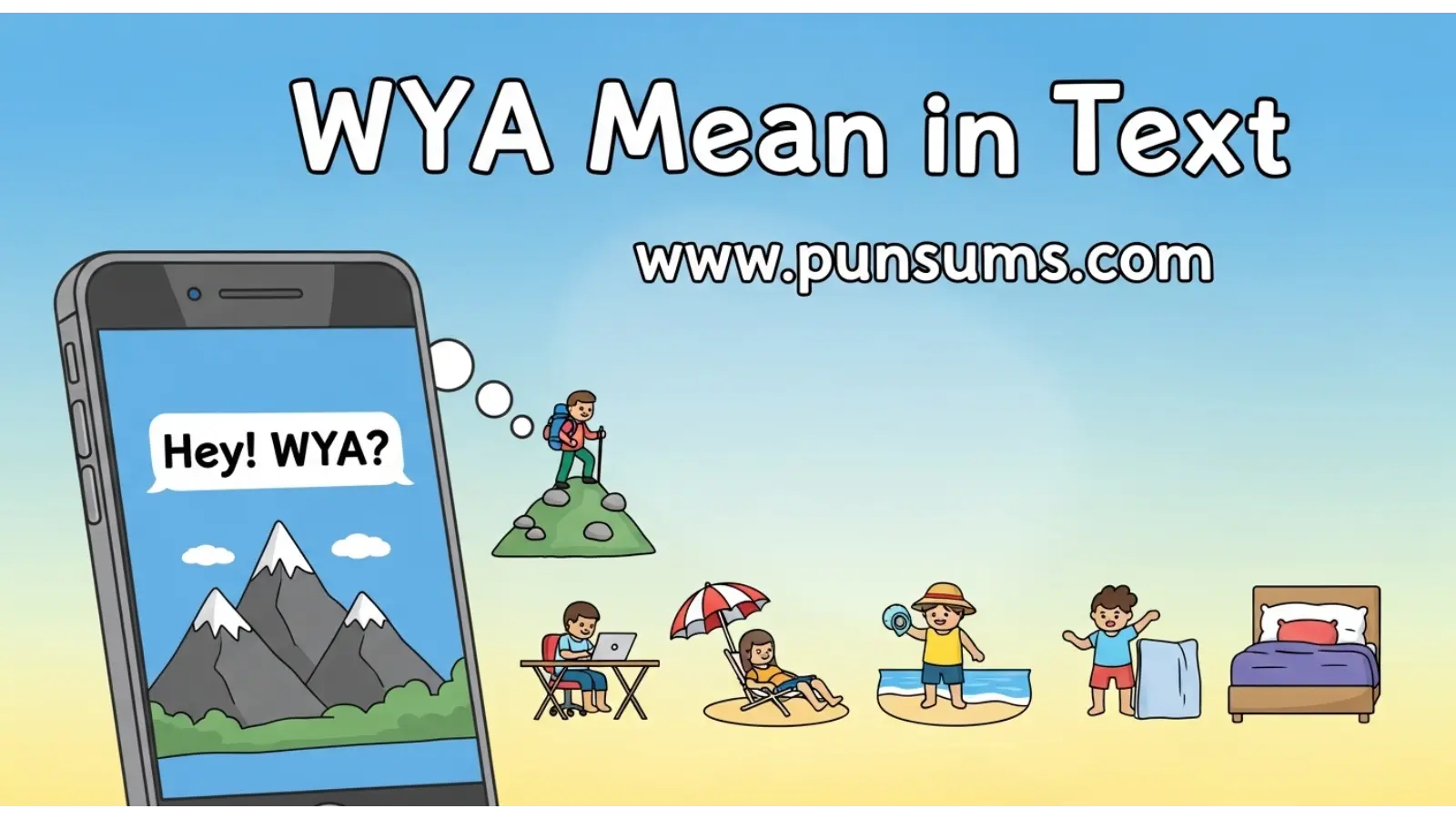
“WYA?”
No greeting. No context. Just three letters staring at you like they already expect an answer.
Maybe it came from a friend in a group chat. Maybe your crush sent it at midnight. Or maybe someone dropped it in your Instagram DMs after ignoring you for three days. That tiny phrase somehow feels casual, urgent, curious, and emotionally loaded all at once.
And honestly? That’s exactly why so many people search for the meaning of WYA in text.
Because online slang is never just about the literal words. Tone changes everything. Timing changes everything. Even who sends it changes everything.
Sometimes “WYA” means someone genuinely wants to know your location. Other times, it secretly means:
“Why are you ignoring me?”
“Come hang out.”
“I miss you.”
“Are you avoiding me?”
“Let’s do something.”
“Why aren’t you here?”
Internet language has become emotional shorthand. Three letters can carry a whole mood.
Let’s break it down in a way that actually makes sense.
WYA – Quick Definition
WYA usually stands for:
“Where You At?”
People use it in texts, Snapchat, TikTok comments, Instagram DMs, WhatsApp chats, and group conversations to ask where someone is or what they’re doing.
But emotionally, WYA often means much more than just location.
Depending on tone and context, it can mean:
• Checking on someone casually
• Wanting attention
• Flirting
• Feeling left out
• Inviting someone somewhere
• Reacting emotionally
• Calling someone out for disappearing
• Joking with friends
• Showing curiosity or interest
Here are a few common examples:
• “WYA bro? Everyone’s here already.”
• “It’s Friday night and you ghosted us… WYA?”
• “WYA rn 👀”
• “WYA? Miss talking to you.”
Notice how the emotional tone changes every time?
That’s the interesting part about internet slang. The same phrase can feel playful, romantic, annoyed, caring, or dramatic depending on the situation.
At its core, WYA is about attention and presence. Someone is emotionally noticing your absence.
Origin & Background
WYA came from casual spoken English long before texting made it popular.
People have been saying “Where you at?” in conversations for decades, especially in urban slang, youth culture, hip-hop communities, and informal American speech patterns.
Eventually, texting culture shortened everything.
“Where are you?” became:
“Where you at?”
Then:
“WYA”
Fast typing changed language completely. Early SMS limits, social media captions, gaming chats, and meme culture pushed people toward faster communication.
Then platforms like Snapchat, TikTok, Twitter, and Instagram accelerated it even more.
On TikTok especially, WYA became emotionally dramatic. People started using it in videos like:
• “When your best friend gets in a relationship and forgets you… WYA?”
• “Me texting him ‘WYA’ after acting uninterested all week.”
• “WYA summer 2019 version of me?”
Suddenly, it wasn’t just about physical location anymore. It became emotional location too.
That’s how internet slang evolves. Words stop being literal and start becoming emotional symbols.
Online language changes fast because emotions move fast online.
Real-Life Conversations
WhatsApp Chat
Ayesha: “Movie starts in 20 mins.”
Hassan: “Parking took forever.”
Ayesha: “WYA???”
Here, WYA shows urgency and impatience.
Instagram DM
“WYA these days? You disappeared.”
This version feels emotionally softer. Almost caring.
TikTok Comment
“Bro dropped one post and vanished. WYA 😭”
Now it becomes humorous exaggeration.
Group Chat
“Everyone’s waiting outside. WYA?”
This is straightforward and social.
Late-Night Text
“Hey… WYA?”
This one feels completely different. More personal. Possibly romantic.
That’s the hidden psychology of slang. Tiny wording shifts completely change emotional meaning.
Most people don’t consciously analyze it. They just feel it.
Emotional & Psychological Meaning
WYA sounds simple, but psychologically, it often signals emotional awareness.
When someone says “WYA,” they’re usually acknowledging your absence in some way.
And humans notice absence emotionally.
That’s why the phrase can feel surprisingly intense depending on timing.
For example:
If a friend texts “WYA?” after you’ve been quiet for days, it may signal care.
If someone sends “WYA rn 👀” at night, it may signal attraction or curiosity.
If a group chat says “WYA bro,” it may signal social inclusion.
If someone repeatedly asks “WYA?” after being ignored, it can even reveal insecurity or emotional frustration.
Internet slang works because people hide emotions inside casual language.
A lot of modern communication is emotionally indirect.
People don’t always say:
“I miss you.”
Instead they say:
“WYA?”
Mini-story example:
Imagine someone stops talking in a friend group after a breakup. Nobody knows what to say directly. Then one friend casually texts:
“Yo WYA? Haven’t seen you online.”
It looks small. But emotionally, it says:
“We noticed you disappeared.”
That’s why slang matters socially. It often becomes emotional protection.
People use short phrases to communicate feelings without sounding too vulnerable.
That’s the deeper psychology behind it.
Usage in Different Contexts
Social Media
On TikTok, Snapchat, and Instagram, WYA is often playful, dramatic, or flirty.
Examples:
• “WYA soulmate?”
• “WYA summer vibes?”
• “WYA people who still reply fast.”
Social media turned WYA into a meme-style emotional expression.
Friends & Relationships
Among friends, it usually means:
• Where are you physically
• Why are you missing
• Come join us
In dating, though, it can become emotionally loaded.
“WYA tonight?” may secretly mean:
“I want your attention.”
Work or Professional Settings
WYA usually feels too informal for professional communication.
Instead of:
“WYA?”
Professional language sounds more appropriate like:
“Where are you currently?”
“Are you available?”
“Have you arrived?”
Using slang in work chats can sometimes appear unprofessional or immature.
Casual vs Serious Tone
Casual:
“WYA 😂”
Serious:
“WYA? We’re worried.”
Flirty:
“WYA rn 👀”
Annoyed:
“Bruh WYA. You disappeared again.”
The punctuation, emojis, and timing completely change interpretation.
When NOT to Use It
There are situations where WYA may confuse people or create the wrong impression.
Avoid using it in:
• Formal emails
• Professional meetings
• Serious emotional conflicts
• Conversations with older audiences unfamiliar with slang
• Academic communication
• Cross-cultural situations where slang may not translate well
For example, texting “WYA?” during a serious argument may sound dismissive instead of caring.
Similarly, some people may interpret it as rude because it sounds abrupt.
Context protects meaning.
Common Misunderstandings
“WYA always means location.”
Not true.
Sometimes it emotionally means:
“Why are you distant?”
“It’s always rude.”
Again, not true.
Tone matters more than the phrase itself.
“Only Gen Z uses it.”
Millennials and online gamers use it too.
“It’s always flirting.”
Definitely not.
Friends use WYA constantly in normal conversations.
“It means the same everywhere.”
Different cultures interpret direct slang differently.
Internet language is global now, but emotional tone still varies by community.
Comparison Table
| Expression | Meaning | Tone | Usage Context |
|---|---|---|---|
| WYA | Where you at? | Casual, emotional, curious | Texting, DMs, group chats |
| WYD | What you doing? | Curious, conversational | Casual texting |
| BRB | Be right back | Neutral | Online chats |
| HMU | Hit me up | Friendly, social | Social media, texting |
| ILY | I love you | Emotional, affectionate | Relationships, friendships |
| Ghosting | Disappearing without reply | Negative | Dating and social culture |
The emotional difference matters.
WYA focuses on presence and attention, while phrases like WYD focus more on activity.
That subtle distinction changes the emotional feeling completely.
Variations & Types
Internet slang constantly mutates into new forms.
Common WYA variations include:
• “WYA at?”
• “WYA rn?”
• “WYA tho?”
• “WYAAA 😭”
• “wyaaaa”
• “WYA bestie?”
• “WYA weirdly specific TikTok audience?”
Exaggerated spelling usually adds emotional intensity.
For example:
“wyaaaa 😭”
Feels more dramatic and emotionally expressive than:
“WYA.”
Meme culture also transformed WYA into nostalgic humor.
Example:
“WYA 2016 Minecraft squad?”
Now the phrase becomes emotional nostalgia instead of a literal question.
How to Respond When Someone Uses It
Casual Replies
• “At home.”
• “On my way.”
• “Just chilling.”
• “Outside rn.”
Funny Replies
• “Mentally? Lost.”
• “In another dimension.”
• “Fighting demons and bad WiFi.”
• “Emotionally unavailable.”
Mature Replies
• “Sorry, I’ve been busy lately.”
• “Needed some time offline.”
• “I’m around now.”
Respectful Replies
• “Hey, thanks for checking in.”
• “I appreciate you asking.”
• “Everything’s okay now.”
Matching energy matters socially.
A playful WYA deserves a playful reply. A concerned WYA deserves emotional awareness.
That’s modern communication intelligence.
Regional & Cultural Usage
Western Culture
In the US, UK, and Canada, WYA is extremely common in texting culture.
It’s casual, fast, and socially normal among younger generations.
Asian Culture
Many Asian internet users understand WYA through global social media exposure, especially TikTok and gaming culture.
However, direct slang sometimes feels less natural in formal cultures.
Middle Eastern Culture
Younger users often mix English slang like WYA into Arabic or Urdu conversations online.
Especially in gaming chats and Instagram DMs.
Global Internet Usage
Social media erased many language borders.
Now people worldwide use American internet slang even when English isn’t their first language.
That’s the power of online culture. Slang spreads faster than dictionaries can track it.
Generational Differences
Gen Z
Gen Z uses WYA constantly.
For them, slang is identity, humor, emotional expression, and social bonding all at once.
Millennials
Millennials use it too, but often more literally.
Usually:
“Where are you?”
Not always emotionally layered.
Older Generations
Older audiences may find WYA confusing, abrupt, or overly casual.
Some interpret shortened slang as lazy communication because they grew up with more formal texting habits.
Language always reflects generational identity.
Every generation creates communication styles that feel emotionally natural to them.
Is WYA Safe for Kids?
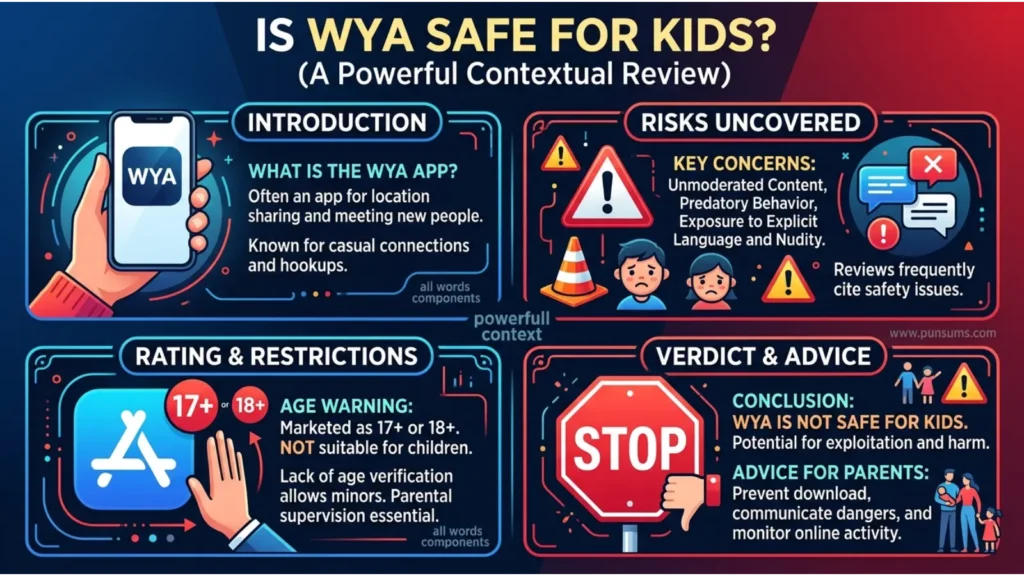
Generally, yes.
WYA is mostly harmless slang used in casual communication.
But context still matters.
Kids and teens sometimes use slang in emotionally manipulative ways, especially online.
For example:
• Pressuring someone socially
• Monitoring attention constantly
• Creating fear of missing out
• Making others feel excluded
Parents don’t necessarily need to fear the phrase itself. What matters more is the emotional environment around online communication.
Healthy communication matters more than specific slang.
FAQs
What does WYA mean in texting?
WYA usually means “Where You At?” It asks where someone is or what they’re doing socially.
Is WYA rude?
Not usually. Tone and context determine whether it feels caring, playful, demanding, or annoying.
What does WYA mean on TikTok?
On TikTok, WYA often becomes dramatic, funny, nostalgic, or flirtatious rather than purely literal.
Is WYA flirting?
Sometimes. A late-night “WYA 👀” can definitely sound flirtatious depending on the relationship.
Can adults use WYA?
Absolutely. Internet slang is no longer limited to teenagers. Many adults use it casually online.
Should you use WYA at work?
Usually no. Professional communication works better with clearer and more formal wording.
Conclusion
WYA may look like just three random letters, but online language is rarely that simple anymore.
Modern slang carries emotion, identity, humor, curiosity, insecurity, affection, and social awareness all at once.
That’s why phrases like WYA survive. They communicate feelings quickly in a world where attention moves fast and conversations happen constantly.
Sometimes WYA literally means:
“Where are you?”
But other times it quietly means:
“I noticed your absence.”
And honestly, that tiny emotional detail explains internet culture better than most people realize.
Read More Posts:

I’m Luna Punster, a wordplay enthusiast who loves turning ordinary phrases into pun-tastic creations. I believe laughter is the best kind of connection, and puns make it even better. Writing witty and clever lines is my favorite way to spark smiles.
Through my playful words, I aim to sprinkle joy and humor everywhere I go.