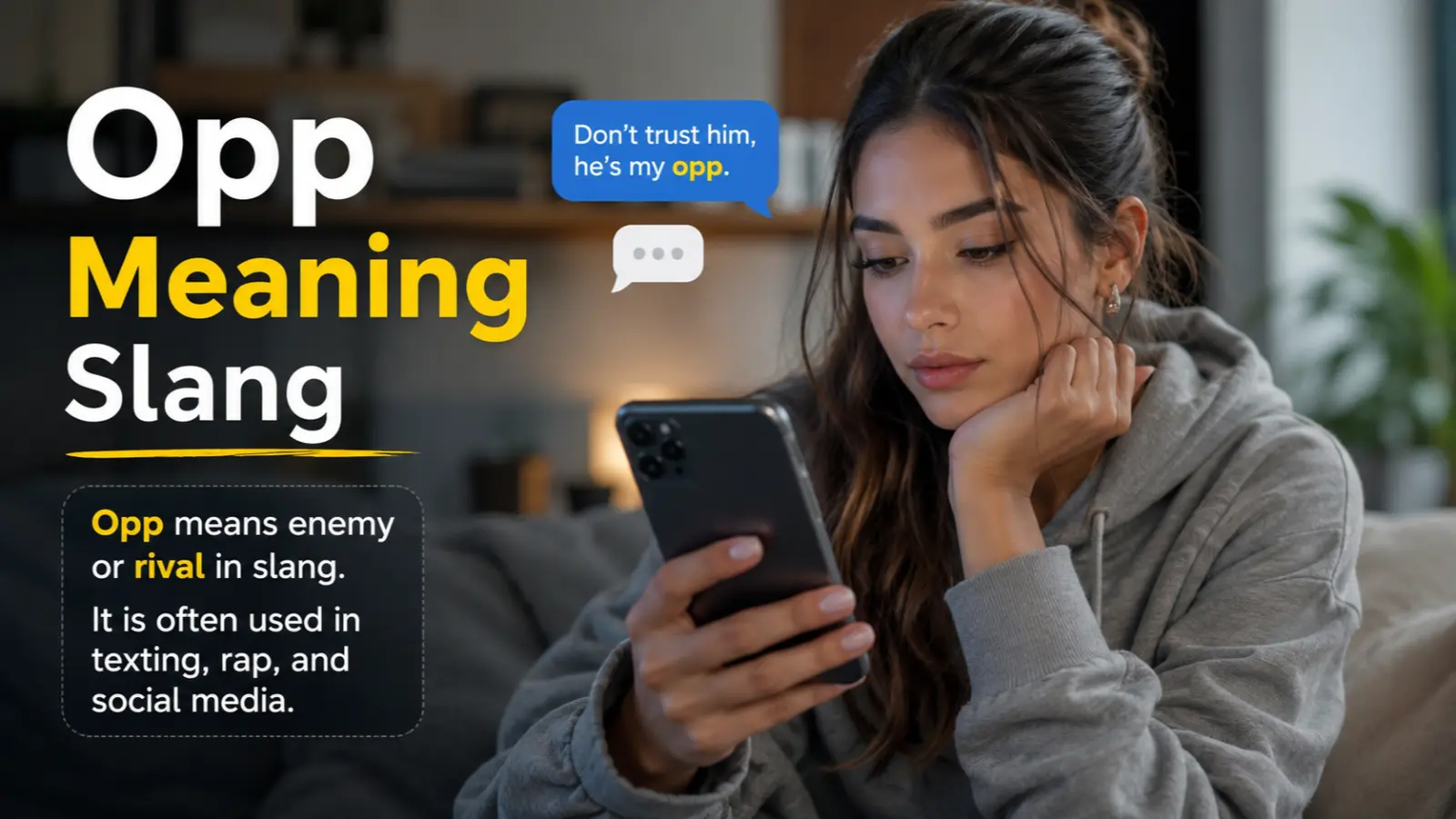
Opp meaning slang is one of the most searched internet slang terms because people often see it in TikTok videos, rap songs, Instagram captions, YouTube comments, and text messages.
If you’ve ever wondered why someone says, “He’s my opp,” or “Watch out for the opps,” you’re not alone.
Like many modern slang expressions, opp has evolved beyond its original meaning. Depending on the conversation, it can refer to a rival, enemy, competitor, or simply someone you’re against.
Understanding the context is important because the same word can sound playful among friends or much more serious in other situations.
If you’re trying to understand social media posts, online gaming chats, or hip-hop lyrics, this guide explains everything you need to know in simple language.
Quick Answer
Opp is slang for opposition or opponent. It usually refers to an enemy, rival, or someone who is against you. The meaning depends on the context, but it almost always describes someone viewed as the “other side.”
What does opp mean in text?
In texting, opp usually means someone who is an enemy, rival, or opponent. The term is commonly used in casual conversations, social media, and online communities.
For example:
- “Don’t trust him—he’s an opp.”
- “They’re hanging out with the opps.”
- “She’s acting like an opp today.”
In many cases, the word doesn’t mean a serious enemy. Friends sometimes use it jokingly to describe someone who disagrees with them.
Opp full form
Many people search for the opp full form, but it isn’t actually an acronym.
Instead, opp is a shortened version of:
- Opposition
- Opponent
Over time, internet users and hip-hop culture shortened these words to simply opp.
So, if you’re asking what does opp stand for, the answer is:
Opp = Opposition or Opponent.
Meaning in Different Contexts
In Text Messages
Someone who is against you or causing problems.
Example:
“He’s been talking behind my back. He’s an opp.”
On Social Media
People often call critics, haters, or rivals “opps.”
Example:
“Ignore the opps and stay focused.”
In Rap Music
The word is widely used to describe rival groups or enemies.
Example:
“The rapper mentioned his opps in the song.”
In Gaming
Gamers may jokingly call opponents “opps.”
Example:
“The whole enemy team is our opp.”
Among Friends
Sometimes it’s playful.
Example:
“You took the last slice of pizza? You’re my opp now.”
Is opp rude, offensive, or neutral?
The answer depends on the situation.
| Situation | Tone |
|---|---|
| Joking with friends | Neutral or playful |
| Calling someone a rival | Mildly negative |
| Gang-related conversations | Serious and offensive |
| Sports competition | Neutral |
Because of its connection with street slang, be careful when using opp around people who may interpret it differently.
Where is opp commonly used?
You’ll frequently see opp meaning slang in:
- TikTok comments
- Instagram captions
- Snapchat messages
- Twitter (X)
- YouTube videos
- Rap lyrics
- Discord servers
- Online games
- Group chats
The popularity of the word has grown because of social media and music culture.
Emotional and Psychological Meaning
Calling someone an opp often creates a feeling of separation.
Psychologically, the word labels someone as being on the opposite side. It can:
- Show distrust
- Express frustration
- Create group identity
- Strengthen loyalty among friends
- Highlight competition
In casual conversations, however, the emotional meaning is often much lighter and humorous.
Origin and Background of the Slang
The slang opp became popular in urban communities in the United States.
It later spread through:
- Hip-hop music
- Drill rap
- Social media platforms
- Viral memes
- TikTok trends
As artists repeatedly used the word in songs, millions of listeners adopted it in everyday conversations.
Today, even people with no connection to its original culture use opp simply to mean “enemy” or “rival.”
Comparison with Similar Slang
| Slang | Meaning | Tone |
|---|---|---|
| Opp | Enemy or rival | Negative |
| Hater | Someone who criticizes you | Mild |
| Rival | Competitor | Neutral |
| Enemy | Serious opponent | Strong |
| Snake | Betrayer | Negative |
| Fake | Dishonest person | Negative |
Although these words overlap, opp usually emphasizes being on the opposite side rather than simply disliking someone.
When to use opp
You can use it when:
- Talking casually with friends
- Discussing sports rivals
- Referring to online competitors
- Describing someone opposing your ideas
Examples:
- “The other team is our opp.”
- “Ignore the opps and keep working.”
When to avoid using opp
Avoid using the slang:
- In professional emails
- During workplace conversations
- In formal presentations
- Around people unfamiliar with internet slang
- In situations involving real conflict or violence
Using it carelessly may cause misunderstandings.
Polite alternatives
If you want a more respectful word, try:
- Opponent
- Rival
- Competitor
- Critic
- Challenger
- Other side
These alternatives sound more professional and are appropriate in formal settings.
Why people use this slang
People like using opp because it is:
- Short
- Easy to type
- Popular online
- Trendy
- Recognized in internet culture
- Common in music
It also quickly communicates that someone is “against” you.
Impact of Using Slang in Communication
Using slang like opp can make conversations feel:
More relatable
Young audiences often understand the term immediately.
More casual
It creates a relaxed tone among friends.
Less clear
Older readers or people unfamiliar with slang may misunderstand it.
Always consider your audience before using internet slang.
Is it safe for social media?
Generally, yes.
Using opp casually in memes, jokes, captions, or comments is usually acceptable.
However, avoid using it:
- To threaten others
- To encourage bullying
- In violent or illegal contexts
- To target specific individuals
Context always matters.
Real-Life Conversation Examples
Friendly
Emma: You finished the last cookie.
Lily: Guess I’m your opp now.
Casual
Jake: Ignore the opps.
Ryan: I’m focused on my goals.
Argumentative
Alex: He’s spreading rumors.
Chris: Sounds like an opp.
Social Media
“No matter what the opps say, keep winning.”
Gaming
Player 1: Ready?
Player 2: Let’s beat these opps.
Sports
“Our biggest opp this season is the defending champion.”
Common Misunderstandings
Many people think:
- Opp always means gang member. ❌
- Opp always refers to violence. ❌
Actually, most internet users simply mean:
- Rival
- Competitor
- Someone against you
The meaning depends entirely on context.
Variations and Types
You may also see:
| Variation | Meaning |
|---|---|
| Opp | One rival |
| Opps | Multiple rivals |
| Main opp | Biggest enemy |
| Fake opp | Someone pretending to oppose you |
| Internet opp | Online rival |
How to Respond When Someone Uses It
If someone says:
“You’re my opp.”
Possible responses include:
- “Haha, fair enough.”
- “Only for today!”
- “What did I do?”
- “Let’s settle this.”
- “We’re still friends.”
If they are serious, ask for clarification instead of assuming.
Regional and Cultural Usage
United States
Most common. Frequently appears in rap music and social media.
United Kingdom
Increasingly recognized through American internet culture.
Canada
Used among younger social media users.
Australia
Less common but understood by many Gen Z users.
Worldwide
TikTok, Instagram, and YouTube have helped spread the slang internationally.
Comparison Table
| Word | Meaning | Formal? | Common Online? |
|---|---|---|---|
| Opp | Rival or enemy | No | Yes |
| Opponent | Person competing against you | Yes | Yes |
| Rival | Competitor | Yes | Moderate |
| Enemy | Serious opponent | Yes | Yes |
| Hater | Constant critic | No | Very common |
| Critic | Someone giving criticism | Yes | Moderate |
Frequently Asked Questions
What does opp mean in slang?
It means an enemy, rival, opponent, or someone who is against you.
What does opp stand for?
It comes from the words opposition or opponent rather than being a traditional acronym.
Is calling someone an opp offensive?
Not always. Friends often use it jokingly, but it can sound serious depending on the situation.
Why do rappers say opp?
Many rap artists use opp to describe rivals or enemies, which helped popularize the term worldwide.
Is opp only used in America?
No. Although it originated in the United States, social media has made it common in many countries.
Can opp mean a friend?
Normally, no. However, friends sometimes jokingly call each other opp during playful disagreements.
Conclusion
Understanding opp meaning slang is easier once you know its context. In most cases, opp refers to an opponent, rival, or enemy, whether in texting, social media, gaming, sports, or music. While the word is often used humorously among friends, it can also carry a more serious meaning in certain situations.
Before using the term, think about your audience and the setting. In casual conversations, opp can be a fun and trendy expression. In professional or formal communication, however, words like opponent, competitor, or rival are usually better choices. Knowing when and how to use this slang will help you communicate more clearly and avoid misunderstandings.