What do wtv mean in text is a question many people ask when they first see this short and casual slang online. With the rise of texting, social media, and gaming chats, abbreviations like “wtv” have become extremely common. People use them to save time, express emotions quickly, or keep conversations informal.
If you’ve ever received a message with “wtv” and felt unsure about its tone, you’re not alone. The meaning can slightly change depending on context, which is why understanding it fully is important for clear communication.
Quick Answer:
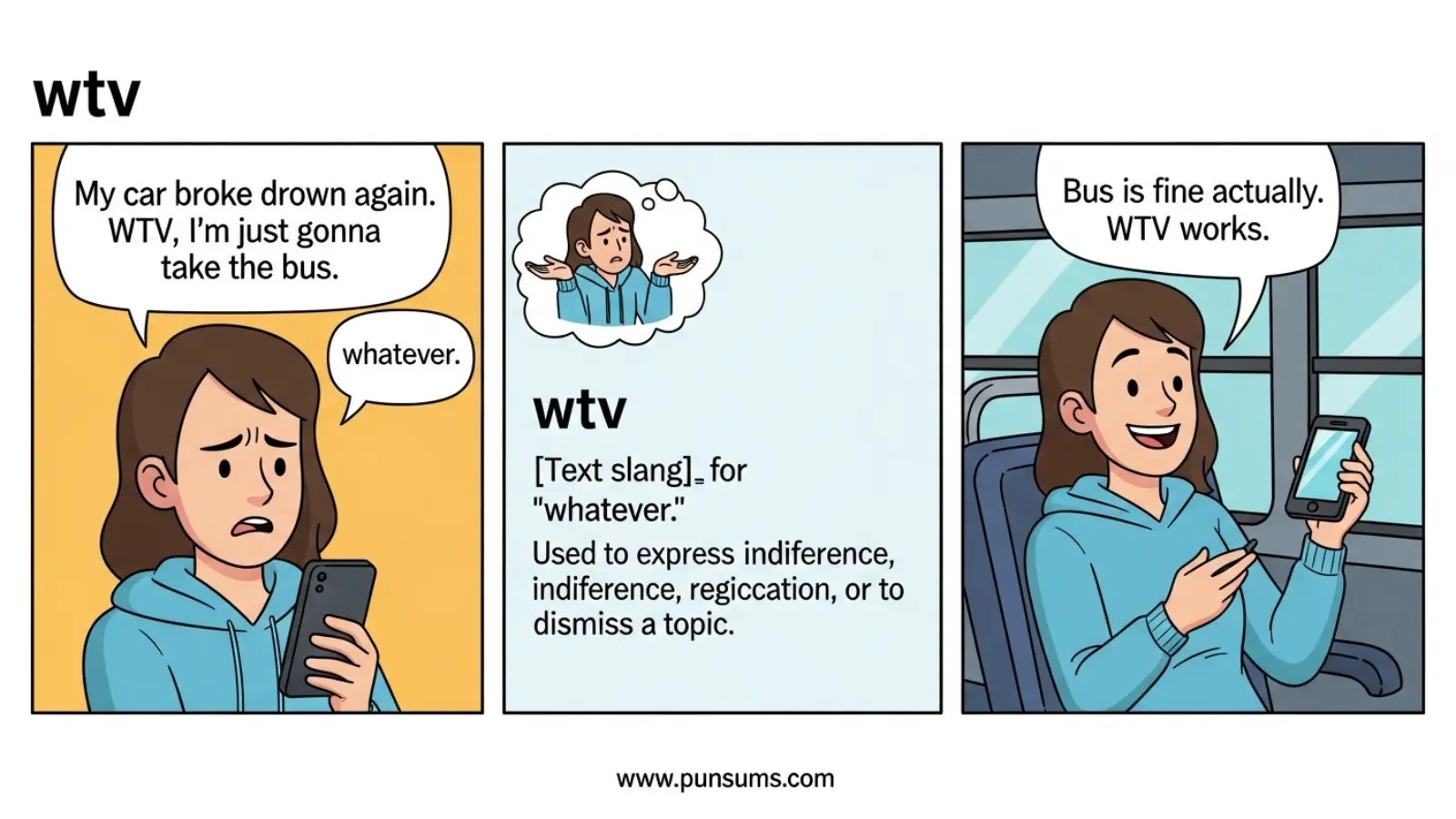
“WTV” means “whatever.” It is used to show indifference, agreement, or sometimes annoyance depending on the situation.
What does wtv mean in text
The slang “wtv” is a shortened version of the word “whatever.” It is widely used in text messages, chats, and social media conversations.
People use it to:
- Show they don’t mind something
- Express lack of interest
- End a conversation quickly
- Indicate mild frustration
The tone of “wtv” depends heavily on how and where it is used.
Wtv full form and definition
The full form of “wtv” is “whatever.”
In simple terms, it means:
- Anything is fine
- I don’t care much
- Do what you want
It is a flexible slang word that can sound neutral, relaxed, or even slightly rude.
Is wtv rude, offensive, or neutral
“Wtv” is not inherently offensive, but its tone can shift based on context.
Neutral use:
- When you genuinely don’t mind a decision
Casual use:
- When chatting with friends in a relaxed tone
Potentially rude use:
- When used to dismiss someone’s opinion
- When ending an argument abruptly
For example, replying “wtv” during a disagreement can sound dismissive or uninterested.
Where is wtv commonly used
“Wtv” is mostly used in informal digital communication such as:
- Text messages
- Social media platforms
- Online gaming chats
- Messaging apps
It is rarely used in professional or formal settings because it can appear careless or disrespectful.
Real-life examples of usage
Friendly tone:
- “Pick any movie, wtv works for me.”
Casual tone:
- “I’m bored, wtv you wanna do?”
Argumentative tone:
- “Wtv, I don’t even care anymore.”
Gaming or social media context:
- “Wtv, let’s just start the match.”
These examples show how tone changes meaning.
Origin and background of wtv
“Wtv” comes from the word “whatever,” which has been part of English for centuries. The shortened version appeared with the rise of texting culture in the early 2000s.
As mobile phones and online chats became popular, people started shortening words to type faster. Over time, “wtv” became widely accepted in casual communication.
Comparison with similar slang
| Slang | Meaning | Tone | Usage |
|---|---|---|---|
| WTV | Whatever | Neutral to dismissive | Casual chats |
| IDC | I don’t care | Direct, sometimes rude | Arguments or indifference |
| IDK | I don’t know | Neutral | Everyday conversations |
| Meh | Not impressed | Mildly negative | Opinions or reactions |
This table helps you understand how “wtv” compares to similar expressions.
When to avoid using wtv
Avoid using “wtv” in these situations:
- Professional emails or work chats
- Talking to someone you don’t know well
- Serious discussions or emotional conversations
- Situations where clarity matters
Using it in the wrong context can create misunderstandings or seem disrespectful.
Polite alternatives to wtv
If you want to sound more polite, consider these alternatives:
- “Anything works for me”
- “I’m okay with whatever you choose”
- “That’s fine with me”
- “No preference from my side”
These options keep the meaning but improve tone and clarity.
Why people use this slang
People use “wtv” for several reasons:
- Saves time while typing
- Keeps conversations casual
- Expresses relaxed attitude
- Helps avoid long explanations
It fits perfectly into fast-paced digital communication where short responses are preferred.
Impact of using slang in communication
Slang like “wtv” can make conversations feel more natural and friendly. However, it also has downsides.
Positive impact:
- Builds connection in informal chats
- Makes communication quicker
Negative impact:
- Can cause misunderstandings
- May appear rude in certain contexts
- Not suitable for professional settings
Balance is key when using slang.
Is it safe for social media
Yes, “wtv” is generally safe for social media use. It is widely understood and commonly used among younger audiences.
However, keep in mind:
- Tone can still be misunderstood
- Public posts may reach different audiences
- Overuse can make communication seem careless
Use it thoughtfully depending on your audience.
Examples section
Friendly:
- “We can eat anywhere, wtv you like.”
Casual:
- “Wtv, I’ll see you later.”
Argumentative:
- “Wtv, you never listen anyway.”
Gaming context:
- “Wtv, just respawn and try again.”
Social media:
- “Wtv happens, happens.”
These examples show how flexible the slang is.
FAQs
What does wtv stand for in text
It stands for “whatever,” meaning anything is fine or not important.
Is wtv rude in texting
It can be, depending on tone. It may sound dismissive in arguments.
Can I use wtv in professional messages
No, it is too informal and may appear unprofessional.
What is the difference between wtv and idc
“Wtv” is softer and flexible, while “idc” sounds more direct and blunt.
Is wtv popular among teenagers
Yes, it is commonly used by younger people in casual chats.
Can wtv mean agreement
Yes, it can show agreement when used in a relaxed tone.
Conclusion
Understanding what do wtv mean in text helps you communicate more clearly in today’s digital world. The slang “wtv” simply means “whatever,” but its tone can vary from relaxed to dismissive depending on context.
Using it correctly is all about awareness. In casual conversations with friends, it works perfectly. In serious or professional situations, it is better to choose more polite alternatives.
Always consider your audience and the tone you want to convey. That way, you can use slang like “wtv” effectively without causing confusion.
Read More Posts:
What Does HB Mean in Text from a Girl Meaning in Text

I’m Lexi Laffs, a cheerful writer who loves adding humor and heart to every message I create. I enjoy crafting playful wishes and puns that make people smile and laugh. My words are all about spreading positivity and lighthearted fun. Through my writing, I hope to brighten your day—one laugh at a time.