You’re scrolling through Instagram DMs late at night, somebody replies with:
“Bro I’m OTG rn.”
Or maybe your friend texts:
“Can’t talk much, OTG.”
Now your brain pauses for a second.
Wait… does OTG mean “On The Go”? “On The Grind”? “Only The Guys”? Or something completely different depending on the vibe?
That’s exactly why so many people search for what OTG means in text messages, TikTok comments, Snapchat chats, and online slang conversations. Internet language moves fast. One acronym can carry multiple emotions depending on who says it, how they type it, and even the energy of the conversation.
Sometimes OTG sounds productive. Sometimes mysterious. Sometimes casually cool. And in certain online circles, it can even hint at status, lifestyle, or emotional distance.
Modern texting isn’t just about words anymore. It’s about mood, identity, social signals, and hidden emotional tone.
Let’s break it down in a way that actually makes sense.
OTG – Quick Definition
OTG usually means:
On The Go
People use it when they are:
- busy
- moving around
- multitasking
- traveling
- rushing somewhere
- unable to chat fully
Example:
“Sorry for the late reply, I’m OTG.”
Meaning:
The person is active, occupied, or constantly moving.
But online slang is rarely limited to one meaning.
Depending on the context, OTG can also mean:
- On The Grind
- Off The Grid
- Only The Guys
- On The Gang
- Over The Game
In some internet spaces, OTG can even reflect emotional energy like:
- “I’m busy with life.”
- “I’m focused.”
- “I don’t have time for drama.”
- “I’m outside living life.”
- “I’m mentally checked out.”
That’s why context matters more than the letters themselves.
At its core, OTG usually signals movement, focus, independence, or social energy. For more detail visit: https://similesking.com
What Does OTG Mean in Different Situations?
Here are the most common meanings of OTG online and in texting culture.
OTG = On The Go
This is the most popular meaning.
Used when someone is busy or traveling.
Example:
“I’ll call later, I’m OTG.”
Tone:
Casual, fast-paced, everyday texting.
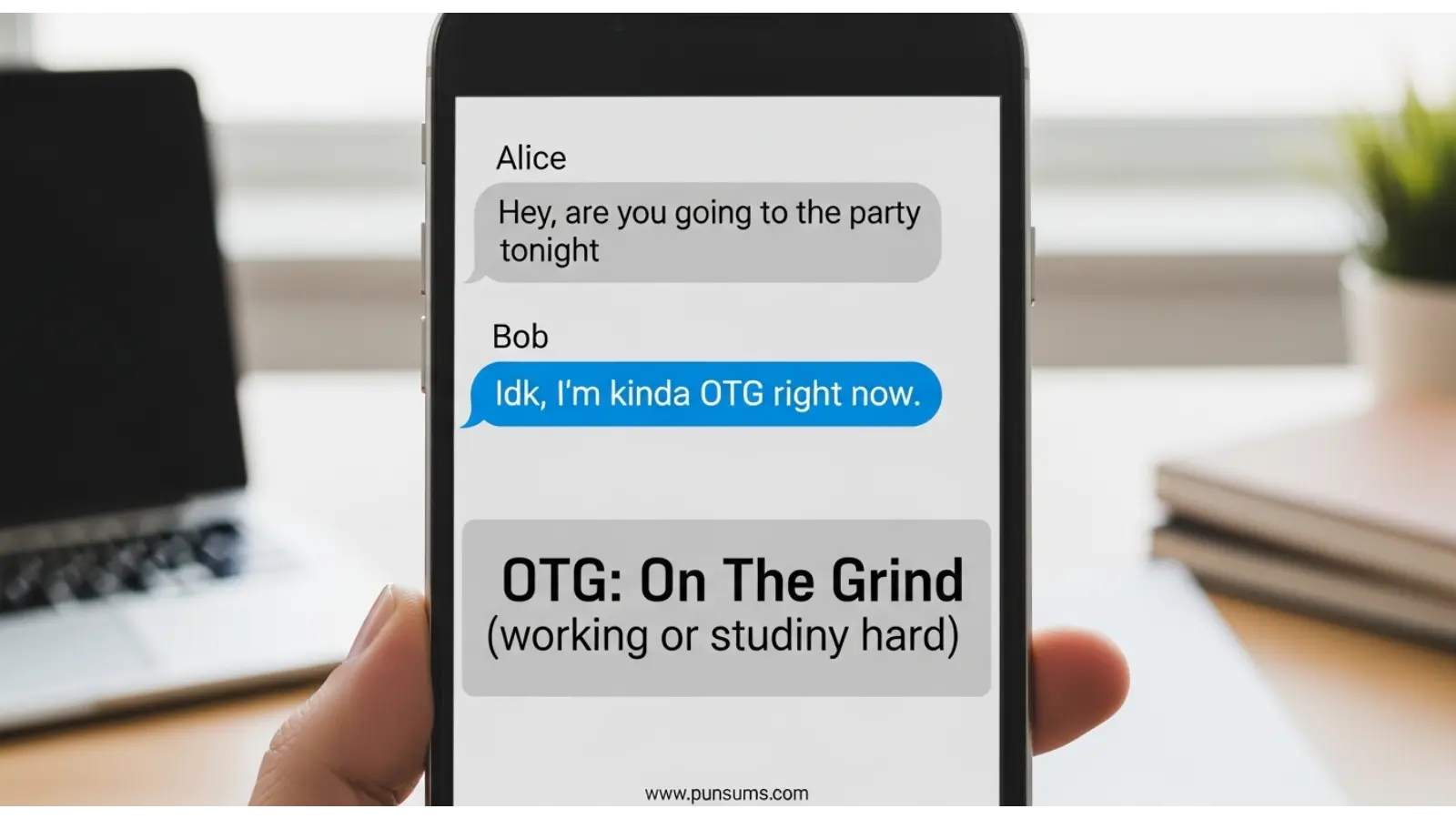
OTG = On The Grind
Common in hustle culture, business motivation posts, and gym culture.
Example:
“No sleep this week. OTG.”
Tone:
Ambitious, hardworking, focused.
OTG = Off The Grid
Used when someone disappears from social media or avoids communication.
Example:
“She went OTG for a week after finals.”
Tone:
Mysterious, emotionally distant, mentally recharging.
OTG = On The Gang
Street slang used in some communities to emphasize seriousness or loyalty.
Example:
“OTG, I’m not lying.”
Tone:
Intense, emotional, serious.
OTG = Over The Game
Sometimes used when someone is emotionally exhausted.
Example:
“I’m honestly OTG with dating apps.”
Tone:
Frustrated, tired, emotionally drained.
Origin & Background
OTG didn’t explode from one single app. Like most internet slang, it evolved through multiple online communities at the same time.
The phrase “On The Go” existed long before social media. People used it in everyday speech for decades. But texting culture shortened everything. Faster typing became part of internet identity.
That’s where OTG gained momentum.
As platforms like Snapchat, Twitter, TikTok, Discord, and Instagram normalized short-form communication, acronyms became emotional shortcuts. People wanted to express status, mood, lifestyle, and attitude in just a few letters.
Then internet culture expanded the meaning.
Fitness creators started using OTG for “On The Grind.”
Gaming communities adapted it emotionally.
Street slang communities created different interpretations.
Meme culture gave it dramatic or sarcastic meanings.
TikTok especially accelerated this evolution. A single viral video can redefine a slang term overnight.
That’s the thing about online language:
It changes faster than dictionaries can keep up.
Real-Life Conversations
WhatsApp Chat
Friend:
“Where are you?”
You:
“OTG rn, be there in 10.”
Emotional vibe:
Busy but responsive.
Instagram DM
“Sorry if I’ve been inactive. Been OTG all week.”
Emotional vibe:
Life feels chaotic and overwhelming.
TikTok Comment
“Bro’s OTG 24/7.”
Emotional vibe:
Admiration mixed with humor.
Group Chat
“Can someone send notes?”
“Can’t rn, I’m OTG.”
Emotional vibe:
Not ignoring people intentionally.
Dating Text
“You disappear a lot.”
“My bad, I’ve just been OTG lately.”
Emotional vibe:
Could mean genuinely busy… or emotionally unavailable.
That’s what makes slang interesting. The same acronym can sound honest, defensive, cool, or avoidant depending on the emotional context.
Emotional & Psychological Meaning
OTG may look simple, but psychologically, it says a lot about modern social behavior.
People use OTG because it softens absence.
Instead of saying:
- “I ignored your message.”
- “I needed space.”
- “I didn’t feel like talking.”
- “Life is messy.”
They say:
“Been OTG.”
That tiny phrase protects social relationships while maintaining emotional distance.
It also reflects modern identity culture.
Being “busy” online often signals:
- productivity
- ambition
- social importance
- independence
- emotional control
Sometimes people genuinely are busy.
Other times OTG becomes a socially acceptable emotional shield.
Imagine this:
A college student stops replying for days. Their friend feels ignored. Finally they text:
“Sorry, been OTG.”
That message quietly reduces tension without forcing a deep emotional explanation.
In dating culture, OTG can also create mystery. Some people intentionally use it to appear less emotionally available or more socially active.
And honestly?
Social media rewards that image sometimes.
That’s the deeper psychology behind it.
Usage in Different Contexts
Social Media
On TikTok, Instagram, and Snapchat, OTG usually means:
- active lifestyle
- being outside
- staying busy
- living fast
- hustle mentality
Example:
“OTG all summer.”
Tone:
Energetic and socially confident.
Friends & Relationships
Among friends, OTG is usually harmless.
Example:
“My bad, I was OTG.”
But in relationships, tone matters more.
Repeated use may sound emotionally distant or avoidant.
Work or Professional Settings
OTG can appear in casual work chats.
Example:
“I’m OTG today but I’ll reply later.”
Still, it feels informal.
In professional emails, full phrases sound better.
Casual vs Serious Tone
Casual:
“OTG rn lol.”
Serious:
“I’ve been OTG mentally these past few weeks.”
One sounds playful.
The other sounds emotionally heavy.
When NOT to Use It
OTG can confuse people in certain situations.
Avoid using it in:
- formal emails
- job interviews
- professional documents
- serious emotional arguments
- conversations with older audiences unfamiliar with slang
It can also sound dismissive during emotional conflicts.
Example:
Person:
“You hurt my feelings.”
Reply:
“Sorry, been OTG.”
That may feel emotionally cold instead of understanding.
Cross-cultural communication can also create confusion because OTG has multiple meanings globally.
Context protects meaning.
Common Misunderstandings
“OTG Always Means On The Go”
Not always.
Different communities use different meanings.
“It’s Rude”
Usually it’s not rude.
But tone and timing matter.
“It Means Someone Is Ignoring You”
Sometimes yes.
Sometimes they are genuinely busy.
“Only Gen Z Uses It”
Millennials and online gaming communities use it too.
“It’s Always Casual”
Not necessarily.
Certain uses can carry emotional frustration or emotional distance.
Comparison Table
| Expression | Meaning | Tone | Usage Context |
|---|---|---|---|
| OTG | On The Go / On The Grind | Busy, active | Texts, social media |
| BRB | Be Right Back | Temporary absence | Casual chats |
| AFK | Away From Keyboard | Offline temporarily | Gaming, Discord |
| OMW | On My Way | Traveling somewhere | Messaging |
| Busy rn | Currently occupied | Direct and neutral | Everyday texting |
| Off The Grid | Disconnected socially | Mysterious | Social media captions |
The emotional difference is subtle but important.
OTG often sounds cooler, more lifestyle-oriented, and socially modern compared to older internet phrases.
Variations & Types
Internet slang constantly mutates.
Here are common OTG variations:
“OTG rn”
Means:
On the go right now.
“Always OTG”
Suggests hustle culture or nonstop activity.
“Mentally OTG”
Emotionally disconnected or overwhelmed.
“OTG lifestyle”
Aesthetic social media phrase connected to travel, freedom, and movement.
“OTG 24/7”
Exaggerated meme version implying constant chaos or nonstop work.
“Stayed OTG”
Past tense storytelling version.
Tiny wording changes create completely different emotional tones online.
How to Respond When Someone Uses It
Casual Replies
- “No worries.”
- “Got you.”
- “Stay safe.”
- “Text me later.”
Funny Replies
- “You’re OTG every single day.”
- “Bro lives in fast forward.”
- “Professional busy person.”
Mature Replies
- “Take your time.”
- “Hope everything’s okay.”
- “I understand.”
Respectful Replies
- “Thanks for letting me know.”
- “We’ll talk when you’re free.”
Matching emotional energy matters socially.
People notice when your tone fits the situation.
Regional & Cultural Usage
Western Culture
In the US and Europe, OTG commonly means “On The Go” or “On The Grind.”
Hustle culture heavily influences usage.
Asian Culture
In some Asian online communities, OTG is used more casually and less emotionally. Gaming and study culture shape the tone.
Middle Eastern Culture
OTG usage often appears through imported social media trends rather than native slang systems.
Global Internet Usage
TikTok globalization changed everything.
Acronyms now travel across countries within days. Teenagers in different cultures can understand the same slang because social media creates shared internet language.
Generational Differences
Gen Z
Uses OTG fluidly with humor, irony, and emotional subtext.
Example:
“Mentally OTG after exams.”
Millennials
Usually interpret OTG more literally as being busy or mobile.
Older Generations
May not recognize the acronym at all or misunderstand it completely.
Language today acts like identity.
The slang people use often reflects their online generation.
Is It Safe for Kids?
Generally, OTG is harmless.
Most uses simply mean:
- busy
- active
- outside
- multitasking
However, context still matters.
Kids may encounter versions connected to:
- online attitude culture
- emotional avoidance
- aggressive slang communities
Parents don’t need to panic over OTG itself, but understanding online language helps adults better understand digital behavior and emotional communication.
Balanced awareness matters more than fear.
FAQs
What does OTG mean in texting?
Most commonly, OTG means “On The Go,” referring to someone being busy, traveling, or multitasking.
What does OTG mean on TikTok?
On TikTok, OTG can mean “On The Go” or “On The Grind,” depending on the creator’s vibe and context.
Is OTG rude?
Usually no. But during emotional conversations, it may sound dismissive if used carelessly.
Can OTG mean something emotional?
Yes. Sometimes people use OTG to emotionally distance themselves or explain social absence indirectly.
Do Gen Z people use OTG differently?
Yes. Gen Z often adds humor, sarcasm, irony, or emotional subtext to OTG usage.
Should I use OTG at work?
Only in casual workplace chats. Formal communication should avoid slang acronyms.
Is It Safe for Kids?
Generally, yes.
OTG itself is harmless.
Most uses simply mean:
- busy
- traveling
- unavailable
- socially inactive
However, parents should still understand how internet slang shapes emotional communication.
Sometimes phrases like:
- “mentally OTG”
- “going OTG”
- “off the grid”
can hint at emotional withdrawal or online pressure.
That doesn’t automatically mean danger. It just shows how younger people express emotions differently online today.
Balanced communication matters more than policing slang.
FAQs
What does OTG mean in texting?
Most commonly, OTG means “On The Go,” referring to being busy, moving around, or unavailable.
Is OTG rude?
Usually no. Tone and context decide whether it sounds dismissive or casual.
What does OTG mean on TikTok?
On TikTok, OTG can mean busy, emotionally distant, focused on self-growth, or socially inactive.
Does OTG mean ignoring someone?
Not always. Sometimes people genuinely are busy. Other times it may create emotional distance indirectly.
Can OTG be used professionally?
In casual workplaces, maybe. In formal communication, clearer wording works better.
Why do Gen Z users say OTG so much?
Because modern slang communicates emotions quickly while sounding socially relaxed and culturally current.
Conclusion
So, what does OTG mean in text?
Most commonly, OTG means “On The Go,” but depending on the situation, it can also mean “On The Grind,” “Off The Grid,” “On The Gang,” or even emotionally imply distance, stress, ambition, or social movement.
That’s what makes internet slang fascinating.
These tiny acronyms carry emotions people don’t always say directly. They compress mood, identity, energy, and social intention into just a few letters.
Modern communication isn’t only about grammar anymore.
It’s about vibe, timing, emotional awareness, and digital identity.
And OTG perfectly reflects that reality.
Sometimes it means:
“I’m busy.”
Sometimes it means:
“I’m building my life.”
And sometimes it quietly means:
“I need space without explaining everything.”
That’s why understanding slang today is really about understanding people.
Read More Posts:
What Does HB Mean in Text from a Girl Meaning in Text