Have you ever sent a long message and received nothing but:
“Mhm.”
Suddenly you’re staring at your screen wondering:
- Are they agreeing with me?
- Are they annoyed?
- Are they listening?
- Are they interested?
- Or are they trying to end the conversation?
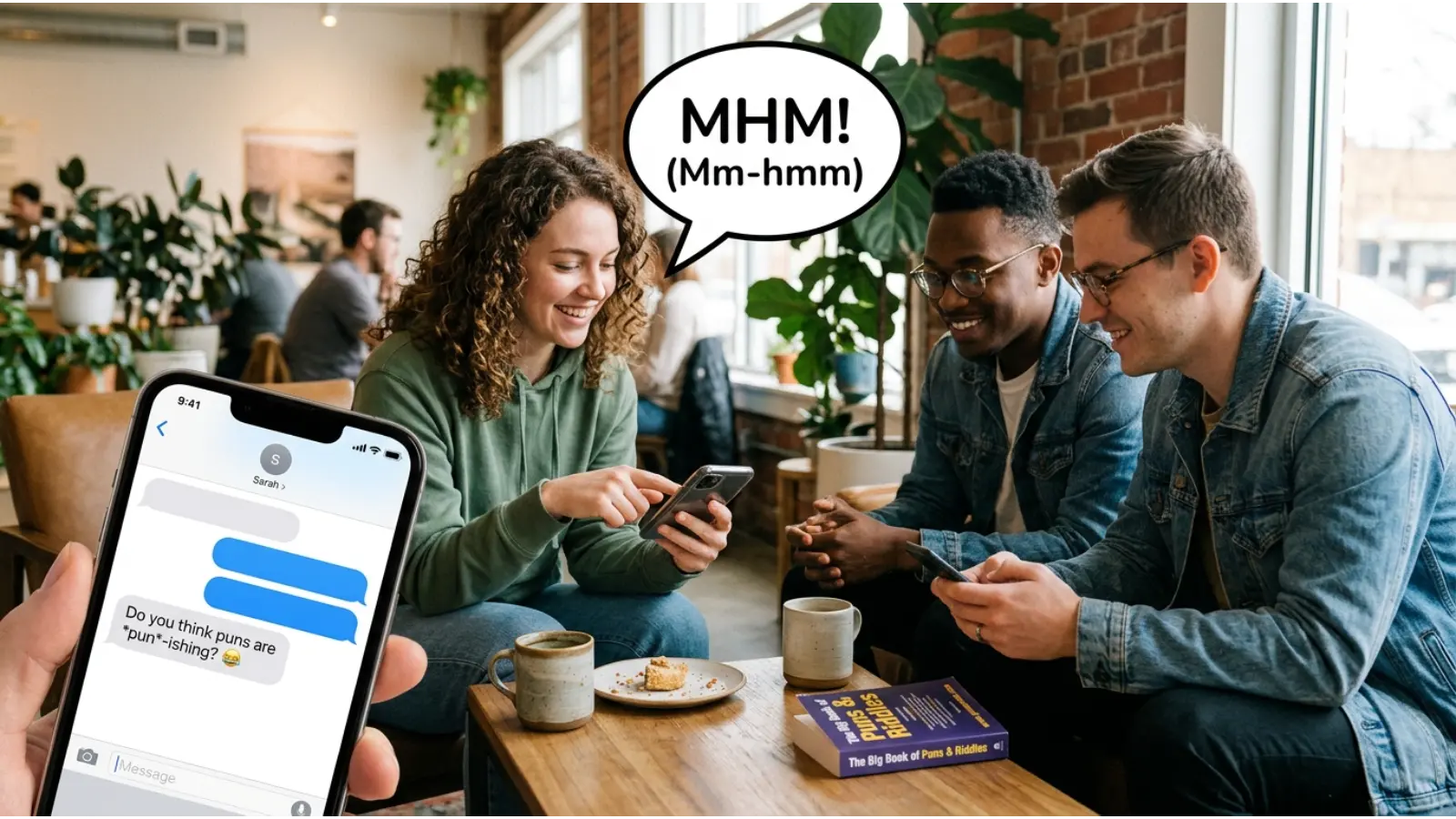
A simple three-letter reply can feel surprisingly confusing. In texting, social media, dating chats, and group conversations, MHM carries much more meaning than most people realize. Depending on tone and context, it can signal agreement, attention, understanding, attraction, boredom, sarcasm, or even emotional distance.
That confusion is exactly why so many people search for the meaning of MHM in text messages. The word looks simple, but its emotional meaning often changes from one conversation to another.
👉 Let’s break it down in a way that actually makes sense.
MHM Meaning in Text – Quick Definition
MHM is a casual written version of the sound people make when they agree or acknowledge something.
The most common meanings include:
- Yes.
- I agree.
- I’m listening.
- I understand.
- That’s true.
- Keep talking.
- I hear you.
- You’re right.
Examples
Friend: “That movie was amazing.”
You: “Mhm.”
Meaning: I agree.
Partner: “You know I was worried about you.”
Reply: “Mhm.”
Meaning: I understand what you’re saying.
Coworker: “The meeting starts at 3 PM.”
Reply: “Mhm.”
Meaning: Message received.
Other Possible Meanings of MHM
Depending on context, MHM can also express:
- Agreement
- Approval
- Acknowledgment
- Interest
- Attraction
- Sarcasm
- Passive annoyance
- Reluctant acceptance
- Emotional validation
- Active listening
- Confidence
- Skepticism
- Teasing
- Flirting
- Polite conversation continuation
At its core, MHM usually means “I hear you and I’m responding without saying much.”
Origin & Background
MHM did not begin on social media.
Long before smartphones existed, people used the sound “mhm” in face-to-face conversations as a nonverbal signal of listening and agreement.
Think about someone nodding while saying:
“Mhm, I get it.”
That natural sound eventually moved into digital communication.
As texting became popular in the early 2000s, people started typing spoken sounds exactly as they heard them. Words like:
- Mhm
- Hmm
- Uh-huh
- Yep
- Nah
- Oof
became part of internet language.
Later, platforms like TikTok, Instagram, Snapchat, and Twitter helped spread these conversational shortcuts even further.
Today, MHM is part of internet culture because it feels authentic. It mimics real human conversation better than simply typing “yes.”
One fascinating thing about online language is that it evolves incredibly fast. A simple sound can become a social signal understood by millions of people worldwide.
Real-Life Conversations
WhatsApp Chat
Friend: “I think I’m going to quit my job.”
You: “Mhm.”
Friend: “I’ve been unhappy for months.”
You: “Yeah, I noticed.”
Here, MHM means you’re listening carefully.
Instagram DM
Person: “You looked really good in that picture.”
Reply: “Mhm 😌”
Here, it can feel playful or slightly flirtatious.
TikTok Comments
Comment: “This generation is addicted to their phones.”
Reply: “Mhm, and you’re commenting too.”
Here, MHM adds sarcasm.
Text Message
Mom: “Don’t forget your appointment tomorrow.”
You: “Mhm.”
Meaning: Message acknowledged.
Group Chat
Friend: “Pizza tonight?”
Everyone: “Yes!”
One friend: “Mhm.”
Meaning: Agreement without extra enthusiasm.
The emotional pattern behind MHM is simple:
People use it when they want to respond without investing lots of words.
Emotional & Psychological Meaning
This is where MHM becomes interesting.
Most slang words communicate information.
MHM communicates emotion.
When someone types MHM, they are often signaling:
- Awareness
- Attention
- Agreement
- Emotional processing
- Quiet confidence
- Reserved reaction
Sometimes people use MHM because they feel comfortable enough not to over-explain.
Other times, they use it as emotional protection.
Imagine a friend tells you:
“I know you’re upset.”
Instead of writing a paragraph, you respond:
“Mhm.”
That single word may carry sadness, acceptance, and vulnerability all at once.
In dating conversations, MHM can sometimes suggest attraction.
For example:
Them: “You looked cute today.”
You: “Mhm 😊”
The word suddenly becomes playful rather than informational.
In arguments, however, MHM may signal frustration.
Person: “You’re not listening.”
Reply: “Mhm.”
Now it feels dismissive.
A small story illustrates this perfectly.
A friend once spent ten minutes explaining a stressful day at work. The response they received was simply:
“Mhm.”
At first, they felt ignored.
Later, they discovered the listener was genuinely paying attention but preferred listening over interrupting.
The same word created two completely different emotional interpretations.
👉 That’s the deeper psychology behind it.
Usage in Different Contexts
Social Media
On TikTok, Instagram, Snapchat, and X, MHM often means:
- Agreeing
- Reacting
- Being sarcastic
- Supporting a point
Example:
“Mhm, facts.”
Friends & Relationships
Among friends, MHM usually feels casual and comfortable.
Example:
Friend: “That teacher gives too much homework.”
You: “Mhm.”
Agreement is understood instantly.
In relationships, tone becomes more important.
A warm MHM feels affectionate.
A cold MHM feels distant.
Work or Professional Settings
MHM should be used carefully in professional communication.
Instead of:
“Mhm.”
Use:
“Understood.”
or
“Thank you for the update.”
These sound clearer and more professional.
Casual vs Serious Tone
Casual Conversation
“Mhm.”
Friendly and natural.
Serious Conversation
“Mhm.”
May sound detached or emotionally unavailable.
Context changes everything.
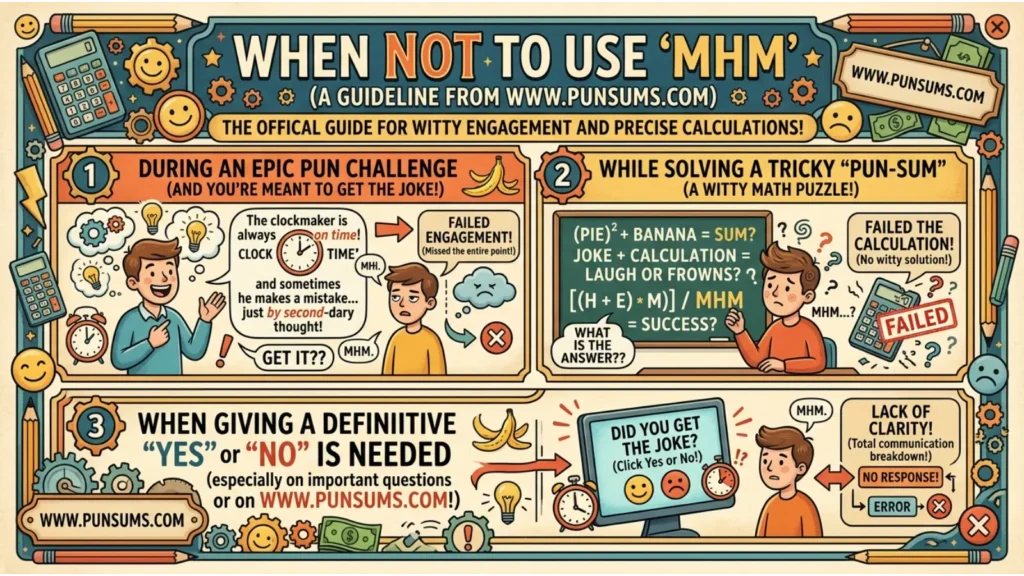
When NOT to Use MHM
Avoid MHM in situations where clarity matters.
These include:
- Business emails
- Job interviews
- Academic communication
- Conflict resolution
- Sensitive emotional discussions
- Conversations with older audiences unfamiliar with internet slang
Someone may misunderstand your intent because MHM lacks detailed emotional information.
Cross-cultural conversations can also create confusion.
Not everyone interprets the word the same way.
👉 Context protects meaning.
Common Misunderstandings
Misunderstanding 1: MHM Always Means Yes
Not necessarily.
Sometimes it simply means:
“I’m listening.”
Misunderstanding 2: MHM Is Always Rude
Wrong.
Many people use it warmly and naturally.
Misunderstanding 3: MHM Means Boredom
Sometimes.
But often it means agreement or understanding.
Misunderstanding 4: MHM Has One Fixed Meaning
Internet language rarely works that way.
Tone and context shape meaning.
Misunderstanding 5: MHM Is Only Used by Young People
People of many age groups use it, though younger generations type it more frequently.
Comparison Table
| Expression | Meaning | Tone | Usage Context |
|---|---|---|---|
| MHM | Agreement or acknowledgment | Neutral | Texting and chats |
| Yep | Yes | Friendly | Casual conversations |
| Yeah | Agreement | Relaxed | Everyday communication |
| Uh-huh | Listening and agreeing | Conversational | Spoken and written |
| Okay | Acceptance | Neutral | Most situations |
| Bet | Got it | Modern slang | Gen Z conversations |
| Facts | Strong agreement | Enthusiastic | Social media |
| True | Agreement | Direct | Casual discussions |
| Hmm | Thinking or uncertainty | Reflective | Analysis or doubt |
The emotional difference is that MHM feels quieter and more subtle than most alternatives.
Variations & Types
Mhmmm
Longer version showing stronger agreement or interest.
Example:
“Mhmmm, that’s a good idea.”
Mhm 😏
Playful or flirtatious.
Mhm 😂
Agreement mixed with humor.
MHM…
Can indicate doubt or passive skepticism.
MHM!!
Strong enthusiasm.
Mhm, sure.
Often sarcastic.
Mhm, okay.
Reluctant acceptance.
These tiny additions completely change the emotional tone.
How to Respond When Someone Uses It
Casual Replies
- “Exactly.”
- “Glad you agree.”
- “Right?”
- “That’s what I thought.”
Funny Replies
- “That sounded suspiciously confident.”
- “Mhm level: expert.”
- “You’re agreeing a little too fast.”
Mature Replies
- “I appreciate you listening.”
- “Thanks for understanding.”
- “Glad we’re on the same page.”
Respectful Replies
- “Understood.”
- “I hear you.”
- “Thanks for your perspective.”
Matching the other person’s energy often creates smoother conversations.
Regional & Cultural Usage
Western Culture
In North America and Europe, MHM is commonly used as a casual acknowledgment.
It often replaces “yes.”
Asian Culture
Many younger internet users understand MHM through global social media exposure.
Usage is especially common among English-speaking online communities.
Middle Eastern Culture
Social media platforms have helped MHM become recognizable among younger generations who consume English-language content.
Global Internet Usage
TikTok, Instagram, YouTube, and messaging apps have transformed MHM into a globally understood digital response.
Online culture frequently crosses borders faster than traditional language learning.
Generational Differences
Gen Z
Uses MHM frequently.
May add emojis, memes, or sarcasm.
Millennials
Often use MHM naturally in texting.
Typically interpret it as acknowledgment.
Older Generations
May prefer clearer responses such as:
- Yes
- Okay
- Understood
For them, MHM can sometimes appear vague.
Language often reflects identity, community, and digital habits.
Is It Safe for Kids?
Generally, yes.
MHM is considered harmless slang.
It does not contain offensive language.
However, parents and educators should understand that tone still matters.
Children sometimes use MHM to:
- Show agreement
- Avoid lengthy responses
- Express mild sarcasm
- Participate in online culture
Like most slang, the word itself is safe, but the surrounding conversation determines its emotional impact.
FAQs
What does MHM mean in texting?
It usually means “yes,” “I agree,” “I understand,” or “I’m listening.”
Is MHM rude?
Not usually. It depends on tone and context.
What does MHM mean on TikTok?
On TikTok, it often signals agreement, sarcasm, validation, or reaction to content.
Is MHM the same as yes?
Often yes, but MHM can also communicate acknowledgment without full agreement.
Do Gen Z use MHM a lot?
Yes. It is common in texting, DMs, comments, and social media conversations.
Should I use MHM at work?
Generally, clearer responses such as “understood” or “thank you” are more professional.
Conclusion
MHM may look like a tiny internet word, but it carries surprisingly powerful social meaning. In most conversations, MHM means “yes,” “I agree,” “I understand,” “I’m listening,” or “I acknowledge what you’re saying.” Yet its real impact comes from tone, context, and emotional intent.
Whether it appears in a text message, TikTok comment, Instagram DM, or group chat, MHM helps people communicate agreement and understanding without using many words. It reflects a broader trend in modern communication where emotions, reactions, and social signals are often compressed into short digital expressions.
Internet culture continues to reshape language every day, and MHM is a perfect example of how a simple sound can become a meaningful social tool. Sometimes it expresses support. Sometimes it signals attraction. Sometimes it communicates quiet understanding.
In a world full of endless messages, MHM reminds us that even the shortest response can carry a lot more meaning than it seems.
Read More Posts:

I’m Lexi Laffs, a cheerful writer who loves adding humor and heart to every message I create. I enjoy crafting playful wishes and puns that make people smile and laugh. My words are all about spreading positivity and lighthearted fun. Through my writing, I hope to brighten your day—one laugh at a time.