
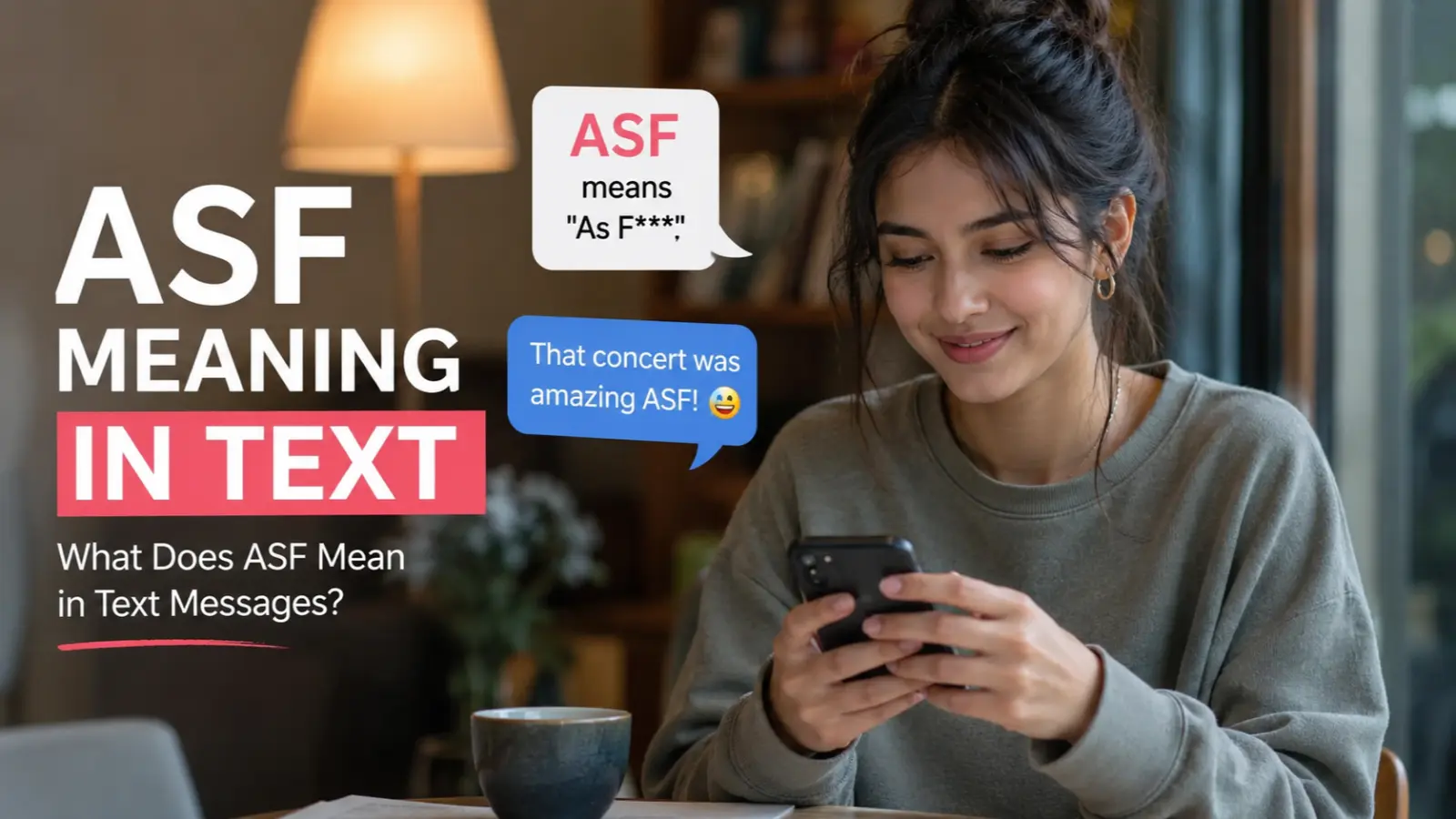
ASF meaning in text is one of the most searched internet slang terms because many people see it in text messages, TikTok comments, Snapchat, Instagram captions, and online chats without knowing what it means.
If you’ve ever received a message like “I’m tired ASF” or “That movie was funny ASF,” you may have wondered what ASF stands for and whether it’s appropriate to use.
Internet slang changes quickly, and abbreviations often have different meanings depending on the conversation.
Understanding the context helps you avoid misunderstanding someone’s message or accidentally using slang in the wrong situation.
Quick Answer
ASF usually stands for “As F*.”** It is an internet slang expression used to emphasize something, meaning “very,” “extremely,” or “really.”
What Does ASF Mean in Text?
In texting and online conversations, ASF is short for “As F*.”** The abbreviation replaces the full profanity while keeping the same meaning.
People use ASF to make their feelings or opinions sound stronger.
For example:
- I’m hungry ASF.
- This game is hard ASF.
- That concert was amazing ASF.
- She’s funny ASF.
In each sentence, ASF simply means “very” or “extremely.”
ASF Full Form
The ASF full form in texting is:
ASF = As F*
The word after “As” is a swear word that is abbreviated to make it more acceptable on social media and messaging apps.
Although the abbreviation hides the full word, most people understand what it represents.
ASF Meaning in Different Contexts
The meaning of ASF depends on where it appears.
Text Messages
Friends often use ASF to exaggerate emotions.
Example:
I’m sleepy ASF.
Meaning:
I’m extremely sleepy.
Social Media
People use ASF in captions, comments, and memes.
Example:
This pizza is good ASF.
Meaning:
This pizza is really delicious.
Gaming
Gamers frequently use ASF during gameplay.
Example:
That boss is difficult ASF.
Meaning:
The boss is extremely difficult.
Online Chats
ASF makes conversations feel casual and expressive.
Example:
Your new profile picture looks cool ASF.
Is ASF Rude, Offensive, or Neutral?
ASF is generally considered mildly offensive because it represents a swear word.
Whether it is acceptable depends on the audience.
| Situation | Appropriate? |
|---|---|
| Friends | ✅ Usually yes |
| Family | ⚠️ Depends |
| School assignments | ❌ No |
| Workplace emails | ❌ No |
| Professional communication | ❌ Avoid |
| Casual social media | ✅ Common |
If you’re unsure, it’s safer to use a more polite expression.
Where Is ASF Commonly Used?
ASF is popular on many online platforms, including:
- TikTok
- Snapchat
- X (Twitter)
- Discord
- Messenger
- Online gaming chats
It appears most often among teenagers and young adults.
Emotional and Psychological Meaning
People often use ASF because it helps express stronger emotions.
It can communicate:
- Excitement
- Happiness
- Frustration
- Anger
- Surprise
- Humor
- Disbelief
Instead of saying:
I’m excited.
Someone might say:
I’m excited ASF.
The second version sounds more emotional and expressive.
Origin and Background of ASF
ASF became popular through internet culture, texting, memes, and social media.
As messaging apps encouraged shorter communication, people began abbreviating longer expressions.
Over time, “As F***” became “ASF,” making it easier to type while still emphasizing emotions.
Today, millions of users recognize ASF without needing the full phrase.
Comparison with Similar Slang
| Slang | Meaning | Strength | Professional? |
|---|---|---|---|
| ASF | Very, extremely | High | ❌ No |
| AF | As F*** | High | ❌ No |
| FR | For Real | Medium | ⚠️ Casual only |
| IMO | In My Opinion | Low | ✅ Sometimes |
| TBH | To Be Honest | Low | ✅ Casual |
ASF and AF have almost identical meanings.
When Should You Use ASF?
ASF is appropriate when chatting casually with people who understand internet slang.
Good situations include:
- Friends
- Gaming
- Group chats
- Social media comments
- Funny memes
Avoid using ASF in:
- Business emails
- School reports
- Job applications
- Professional meetings
- Formal presentations
Polite Alternatives to ASF
If you want to sound professional, replace ASF with:
- Very
- Extremely
- Really
- Highly
- Incredibly
- So
- Quite
Example:
Instead of:
I’m busy ASF.
Say:
I’m extremely busy.
Why Do People Use ASF?
People use ASF because it:
- Adds emphasis
- Makes messages more expressive
- Sounds casual
- Fits internet culture
- Saves typing
- Matches modern texting style
It also helps create a relaxed, conversational tone.
Impact of Using Slang in Communication
Slang like ASF can make conversations feel friendly and relatable.
However, overusing slang can:
- Confuse older readers
- Appear unprofessional
- Cause misunderstandings
- Create a negative impression in formal settings
Choosing the right language for the situation is always important.
Is ASF Safe for Social Media?
Yes, ASF is generally accepted on most social media platforms.
However:
- Some schools discourage it.
- Certain workplaces may consider it inappropriate.
- Younger audiences may not fully understand it.
- Some platforms may reduce visibility of posts containing profanity-related language.
Using it occasionally in casual posts is usually fine.
Real-Life Conversation Examples
Friendly
Friend 1:
That movie was funny ASF.
Friend 2:
I couldn’t stop laughing!
Casual
A:
I’m tired ASF today.
B:
You should get some sleep.
Argumentative
A:
You’re being dramatic ASF.
B:
I’m just telling the truth.
Gaming
Player 1:
This level is hard ASF.
Player 2:
Wait until the next one.
Social Media
Caption:
Beach days are relaxing ASF.
Common Misunderstandings
Many people confuse ASF with other abbreviations.
Some think it means:
- As Soon as Feasible
- African Swine Fever
- Air Safety Foundation
While these meanings exist in different industries, ASF meaning in text almost always refers to “As F*.”**
Context is the key to understanding which meaning is intended.
Variations and Types
Similar slang includes:
- AF
- As Heck
- So
- Really
- Extremely
Some users replace ASF with “as heck” when they want to avoid profanity.
How to Respond When Someone Uses ASF
Your response depends on the conversation.
Examples:
If someone says:
I’m hungry ASF.
You can reply:
Let’s grab some food.
If someone says:
This game is hard ASF.
You can respond:
I know! I’ve been stuck too.
Natural responses keep the conversation flowing.
Regional and Cultural Usage
ASF is most common in:
- United States
- Canada
- United Kingdom
- Australia
It has also spread worldwide through social media and online gaming.
Non-native English speakers often learn the slang from TikTok, YouTube, memes, and Instagram.
Frequently Asked Questions
What does ASF mean in text?
ASF usually means “As F*,”** which is used to emphasize that something is very or extremely true.
What does ASF stand for?
The most common ASF full form is “As F*.”**
Is ASF a bad word?
ASF itself is an abbreviation, but it represents a profanity. It is acceptable in casual conversations but should be avoided in formal settings.
Is ASF the same as AF?
Yes. Both have almost the same meaning and are used to add emphasis.
Can I use ASF at work?
No. Professional communication should avoid slang that represents profanity.
Why do teenagers use ASF?
Teenagers use ASF because it sounds expressive, modern, and fits casual internet conversations.
Conclusion
Understanding the ASF meaning in text helps you communicate more confidently online. In most conversations, ASF stands for “As F*”** and simply means “very” or “extremely.” It is widely used in texting, social media, gaming, and casual chats to emphasize emotions or opinions.
Although ASF is common across the internet, it is best reserved for informal conversations with friends or people who are comfortable with internet slang. For professional emails, school assignments, or workplace communication, choose more formal alternatives such as very, extremely, or really.
By paying attention to context and audience, you can decide when ASF is appropriate and avoid misunderstandings while keeping your communication clear and effective.