What does ditto mean in text is a common question people ask when they see this short, simple word used in chats, comments, or messages. Slang and shorthand expressions are everywhere today, especially in texting and social media, and “ditto” is one of those terms that can confuse people if they are not familiar with it. It may look formal, but it is actually widely used in casual conversations too.
Understanding what “ditto” means can help you communicate faster and sound more natural in everyday digital conversations. Instead of repeating the same sentence again, people use this word to save time and keep things simple.
Quick Answer: “Ditto” in text means “the same as what was just said” or “I agree with that.”
What Does Ditto Mean in Text
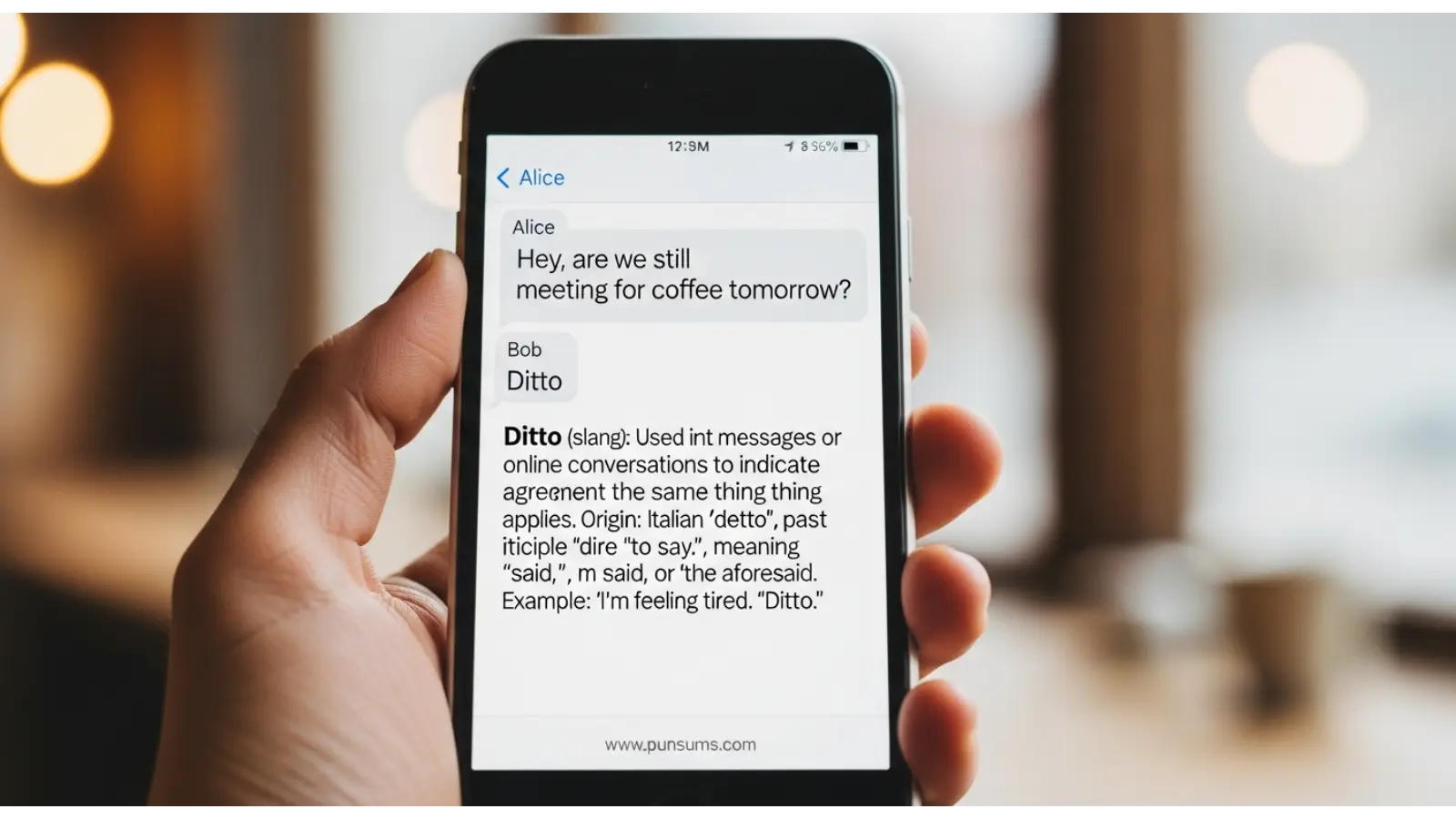
In texting and online conversations, “ditto” simply means you are repeating or agreeing with what someone else just said. It replaces the need to type the same message again.
For example, if someone says “I love pizza,” and you reply “ditto,” it means you also love pizza.
It is commonly used to:
- Show agreement
- Avoid repetition
- Keep messages short and quick
Ditto Full Form or Definition
There is no actual “full form” of ditto because it is not an abbreviation. It is a real word that originally comes from Italian.
The meaning of ditto is:
- The same thing again
- Exactly what was said before
- I feel the same way
So when people search for “ditto full form” or “what does ditto stand for,” the correct answer is that it does not stand for anything. It is a standalone word.
Is Ditto Rude, Offensive, or Neutral
Ditto is generally considered neutral and polite. It is not rude or offensive in most situations.
However, tone matters. In some cases, it might feel:
- Too short in serious conversations
- Slightly lazy if overused
- Dismissive if used without context
For example, replying “ditto” to a heartfelt message might seem less thoughtful. In casual chats, though, it works perfectly fine.
Where Is Ditto Commonly Used
You will see “ditto” used in many types of communication, including:
- Text messages
- Social media comments
- Online forums
- Group chats
- Emails (informal ones)
It is especially popular in fast conversations where people want to respond quickly without typing long replies.
Real-Life Examples of Usage
Friendly Tone
Friend 1: “That movie was amazing!”
Friend 2: “Ditto!”
Meaning: Both people liked the movie.
Casual Tone
Person A: “I am tired today.”
Person B: “Ditto.”
Meaning: Person B feels the same.
Argumentative Tone
Person A: “You never listen to me.”
Person B: “Ditto.”
Meaning: Person B is saying the same complaint applies to Person A.
Gaming or Social Media Context
User 1: “This update is terrible.”
User 2: “Ditto.”
Meaning: User 2 agrees with the opinion.
Origin and Background of Ditto
The word “ditto” comes from the Italian word “detto,” which means “said.” Over time, it became popular in English to indicate repetition.
Historically, it was used in writing and bookkeeping to avoid rewriting the same information. Instead of repeating a word or phrase, people would write “ditto” or use a ditto mark.
Today, it has evolved into a conversational word used in both spoken and digital communication.
Comparison With Similar Slang
| Slang Term | Meaning | Usage Style |
|---|---|---|
| Ditto | Same as above or I agree | Neutral and simple |
| Same | I feel the same | Very casual |
| Me too | I agree or share the feeling | Friendly and common |
| Likewise | Same to you | Slightly formal |
| Agreed | I agree | Direct and clear |
Each option has a similar meaning, but “ditto” stands out because it replaces the entire previous statement.
When to Avoid Using Ditto
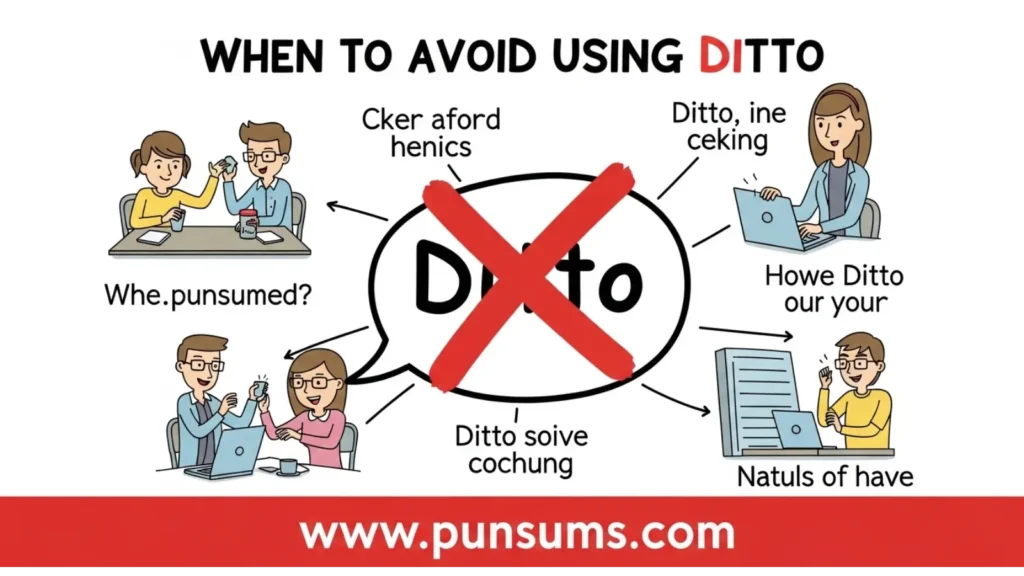
Even though “ditto” is useful, there are situations where you should avoid it:
- Formal emails or professional communication
- Emotional or serious conversations
- Situations where a detailed response is expected
- When clarity is important
In these cases, it is better to fully express your thoughts instead of using a shortcut.
Polite Alternatives to Ditto
If you want to sound more thoughtful or formal, you can use:
- “I agree with you”
- “I feel the same way”
- “That is exactly my thought”
- “Same here”
- “Likewise”
These alternatives help you match the tone of the conversation better.
Why People Use Ditto
People use “ditto” because it is:
- Quick and easy
- Clear and widely understood
- Helpful for avoiding repetition
- Perfect for fast conversations
In a world where speed matters, short replies like “ditto” make communication more efficient.
Impact of Using Slang in Communication
Using slang like “ditto” can have both positive and negative effects.
Positive impact:
- Makes conversations feel natural
- Saves time
- Builds a casual connection
Negative impact:
- Can seem unprofessional in formal settings
- May cause confusion for unfamiliar users
- Might appear careless in serious discussions
The key is to use slang based on context and audience.
Is Ditto Safe for Social Media
Yes, “ditto” is completely safe for social media. It is not offensive, inappropriate, or risky.
You can use it on:
- Instagram comments
- Facebook posts
- Twitter replies
- WhatsApp chats
Just make sure it fits the tone of the conversation.
FAQs
What does ditto mean in text messages
It means “the same as what you said” or “I agree with you.”
What does ditto stand for
Ditto does not stand for anything. It is not an abbreviation.
Is ditto a slang word
It is not pure slang, but it is commonly used in casual and informal conversations.
Can ditto be used professionally
It is better to avoid it in professional settings and use clearer, full sentences instead.
Is saying ditto lazy
Not always. It depends on the situation. In casual chats, it is perfectly acceptable.
What is another word for ditto
Some alternatives include “same,” “me too,” “likewise,” and “I agree.”
Conclusion
Understanding what does ditto mean in text helps you communicate more naturally in modern conversations. It is a simple word that means repeating or agreeing with what someone else has said.
While it is quick and convenient, it is important to use it in the right context. In casual chats, it works perfectly, but in formal or emotional situations, a more detailed response is better.
By using “ditto” thoughtfully, you can keep your communication clear, efficient, and appropriate for any situation.
Read More Posts:

I’m Luna Punster, a wordplay enthusiast who loves turning ordinary phrases into pun-tastic creations. I believe laughter is the best kind of connection, and puns make it even better. Writing witty and clever lines is my favorite way to spark smiles.
Through my playful words, I aim to sprinkle joy and humor everywhere I go.