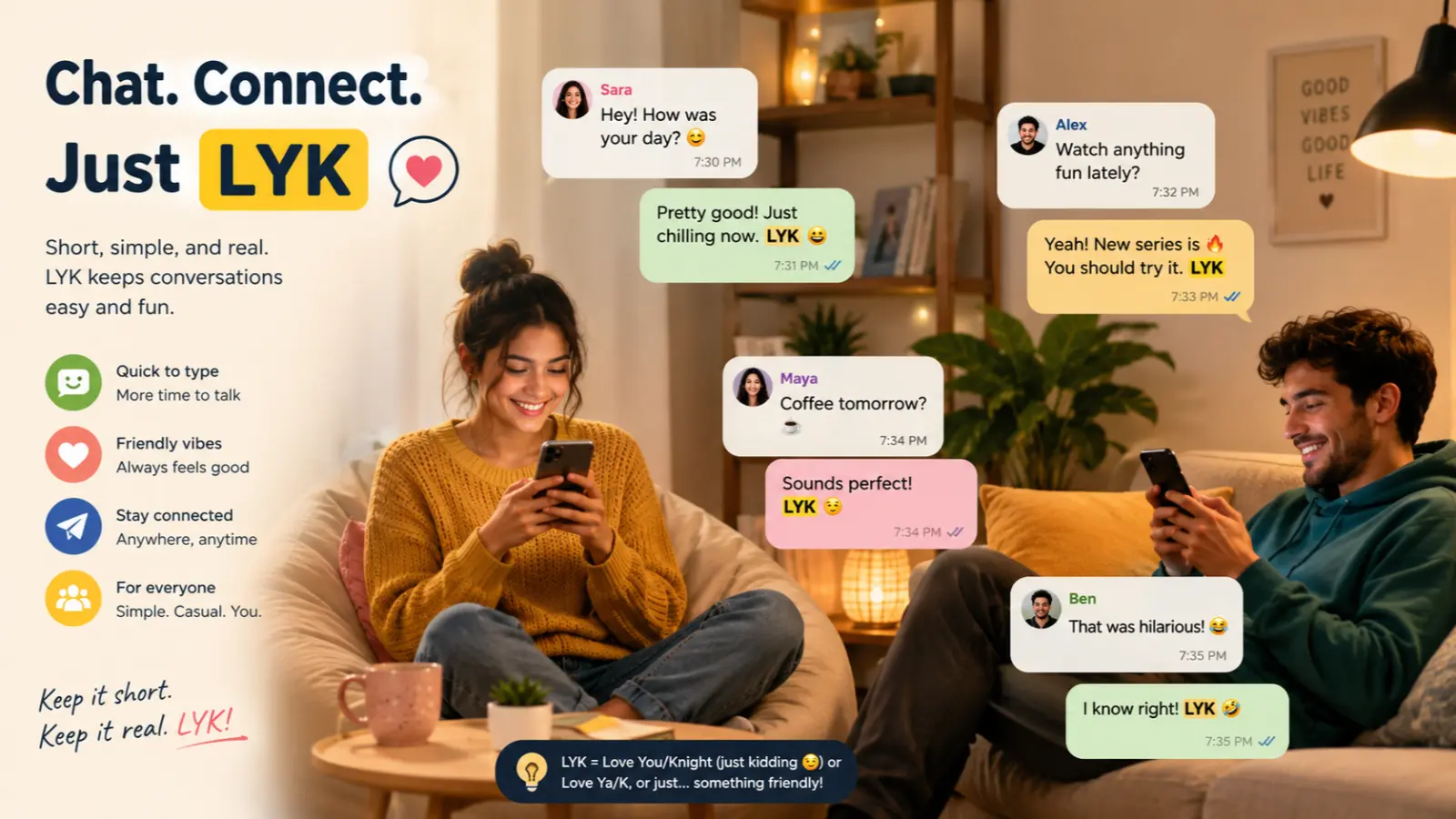
LYK meaning in text is a common internet abbreviation that stands for “Let You Know.” People use it in text messages, chats, emails, and social media conversations when they want to inform someone that they will provide an update later.
The abbreviation helps save time while typing and makes conversations quicker and more casual. If you’ve received a message containing “LYK” and wondered what it means, you’re not alone.
Many people search for this slang because it frequently appears in online communication, especially among younger users and frequent texters.
If you’re chatting with friends, discussing plans, or waiting for information, understanding the meaning of LYK can help you communicate more effectively in today’s digital world.
Quick Answer
LYK = “Let You Know.”
It means the sender will provide more information or an update later when they have it.
What Does LYK Mean in Text?
The phrase LYK is simply a shortened version of “Let You Know.”
People use it when:
- They don’t have an answer yet
- They need more time to decide
- They are waiting for information
- They plan to update someone later
Example
Friend: Are we still meeting tonight?
You: Not sure yet. I’ll LYK soon.
In this conversation, “LYK” means the person will provide an update later.
LYK Full Form
The LYK full form is:
| Abbreviation | Full Form |
|---|---|
| LYK | Let You Know |
Many users search for:
- LYK full form
- What does LYK stand for?
- LYK meaning slang
The answer is the same: LYK stands for “Let You Know.”
Meaning of LYK in Different Contexts
Although the meaning remains the same, the context can slightly change how it is understood.
Personal Conversations
Used between friends and family.
Example:
“I’ll LYK when I get home.”
Work Conversations
Used in informal workplace chats.
Example:
“I need approval first. I’ll LYK once I hear back.”
Social Media
Often used in comments, DMs, and group chats.
Example:
“Not sure if I’m joining the event yet. I’ll LYK.”
Dating and Relationships
Can be used when discussing plans or decisions.
Example:
“I’ll LYK what time I finish work.”
Is LYK Rude, Offensive, or Neutral?
LYK is generally neutral.
It is not considered:
- Rude
- Offensive
- Insulting
- Aggressive
However, tone matters.
Neutral Usage
“I’ll LYK tomorrow.”
Potentially Dismissive Usage
If someone repeatedly says “I’ll LYK” without ever responding, it may feel dismissive or uninterested.
The abbreviation itself is harmless, but how it is used affects how it is perceived.
Where Is LYK Commonly Used?
You will often find LYK on:
- SMS text messages
- Messenger
- Instagram DMs
- Snapchat
- Discord
- Telegram
- Online gaming chats
- Informal workplace messaging apps
Because it saves typing time, it has become a popular shorthand in digital communication.
Emotional and Psychological Meaning of LYK
Beyond its literal meaning, LYK can communicate several emotional signals.
Reassurance
The sender wants the other person to know they haven’t forgotten.
Example:
“I’m checking the details now. I’ll LYK.”
Uncertainty
The person doesn’t yet have the information needed.
Example:
“Still waiting for confirmation. I’ll LYK.”
Courtesy
It shows consideration by promising an update.
Example:
“I’ll LYK when I arrive.”
In many cases, LYK helps maintain communication without requiring an immediate answer.
Origin and Background of LYK
LYK emerged from the rise of:
- Text messaging
- Online chat rooms
- Instant messaging platforms
- Social media communication
As people looked for faster ways to type common phrases, abbreviations became increasingly popular.
Similar abbreviations include:
- BRB (Be Right Back)
- IMO (In My Opinion)
- FYI (For Your Information)
- IDK (I Don’t Know)
LYK followed the same pattern by shortening a frequently used phrase into three simple letters.
LYK vs Similar Slang Terms
Many abbreviations have similar purposes. Here’s how LYK compares.
| Slang | Meaning | Purpose |
|---|---|---|
| LYK | Let You Know | Promise future update |
| IDK | I Don’t Know | Express uncertainty |
| FYI | For Your Information | Share information |
| BRB | Be Right Back | Temporary absence |
| LMK | Let Me Know | Request information |
| TTYL | Talk To You Later | End conversation politely |
LYK vs LMK
These two abbreviations are often confused.
| LYK | LMK |
|---|---|
| Let You Know | Let Me Know |
| Giving information later | Asking for information |
| Promise of update | Request for update |
Example:
“I’ll LYK tomorrow.”
“LMK if you’re available.”
When to Use LYK
LYK works best in casual and semi-professional conversations.
Good Situations
- Making plans
- Waiting for updates
- Confirming schedules
- Discussing events
- Following up with friends
Examples
- “I’ll LYK when the tickets are available.”
- “I’ll LYK after my meeting.”
- “I’ll LYK once I get the results.”
When to Avoid Using LYK
Although widely understood, there are situations where the full phrase may be better.
Formal Business Emails
Instead of:
“LYK tomorrow.”
Use:
“I will let you know tomorrow.”
Academic Writing
Abbreviations like LYK are generally inappropriate in formal assignments and research papers.
Professional Documents
Always use the complete phrase in official communication.
Polite Alternatives to LYK
If you prefer a more professional tone, consider these alternatives:
- I will let you know.
- I’ll update you shortly.
- I’ll keep you informed.
- I’ll get back to you.
- I’ll provide an update later.
- I’ll follow up soon.
These options sound more formal while conveying the same meaning.
Why Do People Use LYK?
Several reasons explain the popularity of LYK.
Saves Time
Typing three letters is faster than typing an entire phrase.
Fits Mobile Communication
Short messages are easier to send on smartphones.
Common Internet Culture
People are accustomed to texting abbreviations.
Keeps Conversations Moving
It provides a quick response when information isn’t immediately available.
Impact of Using Slang in Communication
Slang terms like LYK can improve communication when used appropriately.
Benefits
- Faster conversations
- Informal friendliness
- Greater efficiency
- Easier mobile texting
Drawbacks
- Can confuse older users
- May appear unprofessional in formal settings
- Some people may not know the abbreviation
The key is understanding your audience.
Is LYK Safe for Social Media?
Yes, LYK is completely safe for social media use.
It does not contain:
- Offensive language
- Hate speech
- Adult content
- Harmful meanings
You can safely use it on:
- TikTok
- Snapchat
- X
As always, ensure the surrounding message is respectful and appropriate.
Real-Life Conversation Examples
Friendly Example
Friend: Want to play later?
You: Sure, I’ll LYK when I’m free.
Casual Example
Person A: Are you coming to dinner?
Person B: Maybe. I’ll LYK in an hour.
Argumentative Example
Person A: Why haven’t you decided yet?
Person B: I said I’ll LYK when I know.
Work Example
Coworker: Is the report approved?
You: Not yet. I’ll LYK once management responds.
Family Example
Mom: What time are you coming home?
You: I’ll LYK after work.
Common Misunderstandings About LYK
Mistake 1: Thinking It Means “Like”
Some people confuse LYK with the word “like.”
In texting, however, it usually means “Let You Know.”
Mistake 2: Assuming It’s Rude
The abbreviation itself is neutral and generally polite.
Mistake 3: Confusing It with LMK
Remember:
- LYK = Let You Know
- LMK = Let Me Know
Variations and Types
You may encounter variations such as:
- I’ll LYK
- LYK ASAP
- LYK later
- I’ll let u know
- Let ya know
All carry essentially the same meaning.
How to Respond When Someone Uses LYK
Appropriate responses include:
- “Sounds good.”
- “Okay, thanks.”
- “No problem.”
- “Looking forward to hearing from you.”
- “Keep me posted.”
These responses acknowledge that an update will come later.
Regional and Cultural Usage
LYK is primarily used in:
- United States
- Canada
- United Kingdom
- Australia
- New Zealand
However, because of social media and global internet culture, it is increasingly understood worldwide.
English-speaking internet users are the most likely to use it regularly.
Frequently Asked Questions (FAQs)
What does LYK mean in text?
LYK means “Let You Know.” It indicates that someone will provide information or an update later.
What does LYK stand for?
The LYK full form is “Let You Know.”
Is LYK rude?
No. LYK is generally considered neutral and polite.
Is LYK used on social media?
Yes. It is commonly used on social media platforms, messaging apps, and text messages.
What is the difference between LYK and LMK?
LYK means “Let You Know,” while LMK means “Let Me Know.”
Can I use LYK in professional emails?
It’s better to use the full phrase “I will let you know” in formal business communication.
Conclusion
Understanding the LYK meaning in text can make online conversations easier to follow. The abbreviation stands for “Let You Know” and is commonly used when someone plans to provide information or an update later.
Whether you’re texting friends, chatting on social media, or communicating in a casual work environment, LYK is a simple and effective shorthand. While it’s generally neutral and safe to use, it’s best reserved for informal conversations. In formal situations, using the complete phrase is usually more professional.
By understanding the context, tone, and audience, you can use LYK confidently and communicate more effectively in today’s digital world.

I’m Miles Mirth, a humor-loving writer with a passion for clever puns and cheerful wordplay. I find joy in crafting lines that make people grin, giggle, and groan in delight. For me, laughter is life’s brightest spark, and I love sharing it through my writing. Every pun I create is a little dose of happiness meant to brighten your day.