You’re texting someone. Maybe it’s a class group chat, a TikTok comment section, or a late-night Instagram DM. Then suddenly you see this:
“Can someone send me the notes? TIA.”
Or maybe:
“TIA if you can help me out 😭”
And now you’re wondering…
Wait… what does “TIA” actually mean in text?
Is it friendly? Passive aggressive? Internet slang? A secret Gen Z code? Or one of those abbreviations people casually throw around online expecting everyone to magically understand?
That confusion is exactly why so many people search for the meaning of TIA. Because online language is emotional now. Tiny abbreviations carry tone, attitude, politeness, sarcasm, and even social pressure.
And honestly? “TIA” is one of those phrases that looks simple but changes meaning depending on who says it, how they say it, and where they say it.
👉 Let’s break it down in a way that actually makes sense.
What Does TIA Mean in Text – Quick Definition
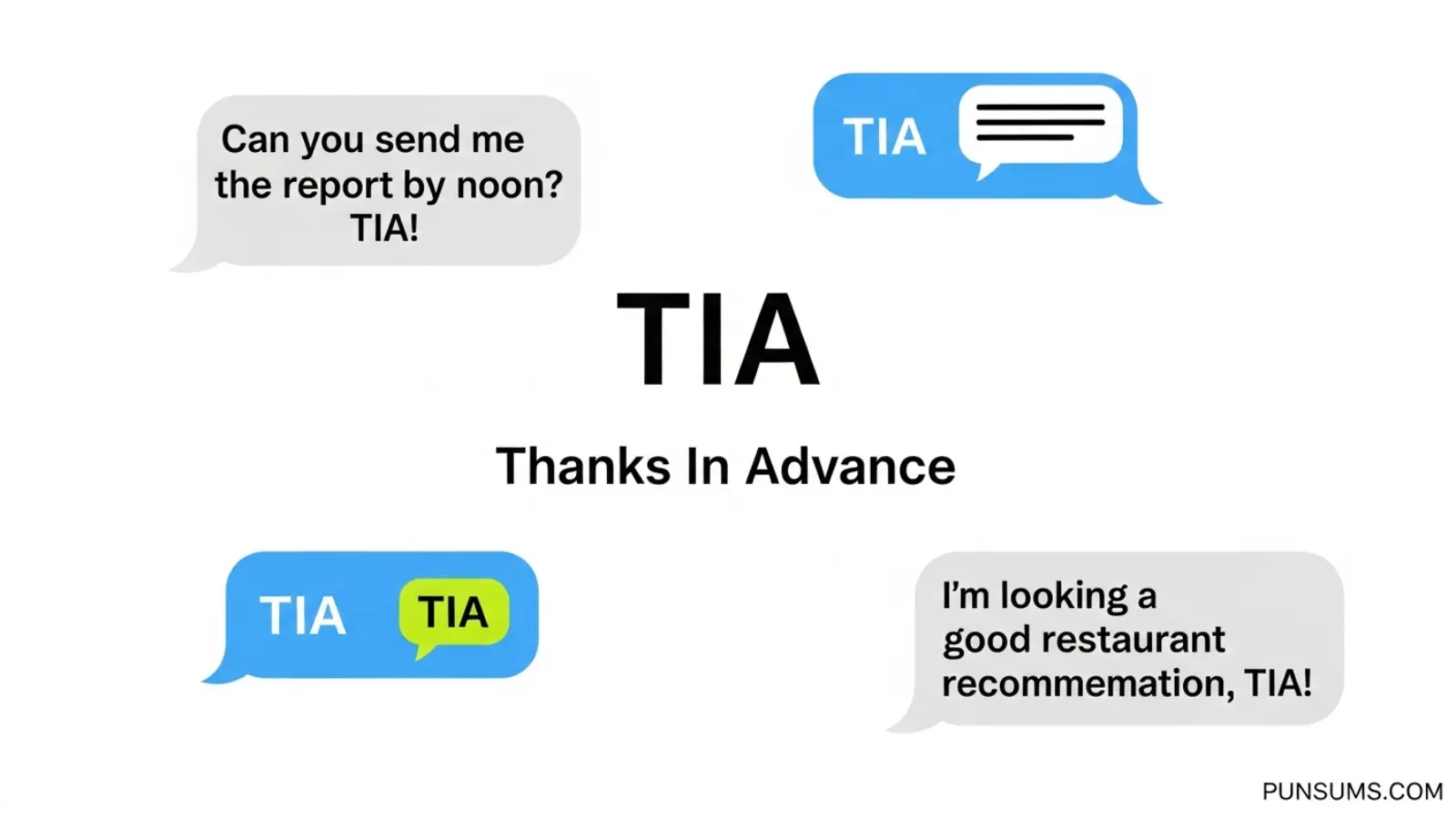
In texting and online conversations, “TIA” most commonly means:
Thanks In Advance
People use it before someone helps them with something.
Example:
“Can anyone explain question 5? TIA.”
Translation:
“I’m thanking you before you even respond.”
It’s basically a shortcut for appreciation. Instead of waiting to say thank you later, the person says it upfront.
But emotionally, TIA can mean different things depending on tone and context.
It can feel:
- polite
- hopeful
- appreciative
- slightly demanding
- passive aggressive
- socially strategic
- playful
- desperate for help
For example:
“Please upload the assignment before midnight. TIA.”
This sounds polite on the surface… but it can also feel like the speaker already expects compliance.
Meanwhile:
“Anyone know a good pizza place nearby? TIA 😂”
This feels casual, friendly, and lighthearted.
Other meanings of TIA also exist depending on context:
- Transient Ischemic Attack (medical term)
- Today I Asked
- This Is Africa
- Thanks In Anticipation
- Trust In Allah
- Teen Internet Addiction (rare usage)
But in texting, social media, chats, and DMs, “Thanks In Advance” is by far the most common meaning.
At its core, TIA is really about social expectation mixed with appreciation.
Origin & Background of TIA
The phrase “Thanks In Advance” existed long before smartphones or TikTok culture.
People used it in emails, office memos, and internet forums back in the early internet days. Especially during the 1990s and early 2000s when online communication started becoming faster and shorter.
Back then, internet users loved abbreviations because typing took longer and character limits mattered more.
That’s where shortcuts like these exploded:
- LOL
- BRB
- IMO
- FYI
- TIA
Eventually, TIA moved from professional emails into casual internet culture.
Then social media changed everything.
Platforms like TikTok, Snapchat, WhatsApp, Reddit, and Instagram made communication more emotional and personality-driven. Suddenly abbreviations weren’t just efficient — they became part of online identity.
Now TIA can sound:
- sweet
- awkward
- funny
- manipulative
- sarcastic
- emotionally soft
depending on punctuation, emojis, and context.
For example:
“Can someone cover my shift tomorrow? tia 🥺”
Lowercase “tia” with the pleading emoji feels emotionally vulnerable and soft.
Meanwhile:
“Need the report by 4 PM. TIA.”
That can feel corporate and slightly pressuring.
That’s the fascinating thing about internet language.
The words stay the same.
The emotional meaning keeps evolving.
And online culture changes fast enough that tone now matters more than the actual letters.
Real-Life Conversations
WhatsApp Chat
Friend 1:
“Can someone send yesterday’s homework?”
Friend 2:
“I got you.”
Friend 1:
“TIA ❤️”
Here, TIA feels warm and appreciative.
Instagram DM
“Heyyy where did you buy that hoodie? TIA 😭”
This usage feels casual, excited, and friendly.
TikTok Comment
“Someone explain the ending pls tia.”
This version feels informal and community-driven.
Group Chat
“Can everybody please stop replying all to emails. TIA.”
Now the tone changes completely.
This sounds annoyed and passive aggressive.
Text Message
“Can you pick me up after practice? TIA.”
This feels polite but slightly assumptive.
The emotional pattern behind TIA is interesting because it often softens requests while still creating social pressure.
People use it to sound kind… while also increasing the chance someone says yes.
That’s internet psychology in action.
Emotional & Psychological Meaning
TIA is actually more emotionally layered than most people realize.
On the surface, it’s gratitude.
But underneath?
It’s social signaling.
When someone says “TIA,” they’re often trying to do several emotional things at once:
- appear polite
- avoid sounding demanding
- encourage cooperation
- reduce awkwardness
- build social warmth
- create subtle obligation
That’s why TIA feels so common online. Modern digital communication lacks facial expressions and tone of voice, so people use shortcuts to emotionally guide conversations.
Imagine this situation.
A student in a class group chat says:
“Can someone share the lecture PDF? TIA.”
They’re not just asking for help.
They’re also signaling:
- “I don’t want to seem rude.”
- “I appreciate whoever helps.”
- “Please don’t ignore me.”
- “I’m trying to sound nice.”
That’s deeper emotional communication hiding inside four letters.
Sometimes TIA can even protect people emotionally.
Instead of directly begging or sounding needy, they use a polite abbreviation to reduce vulnerability.
In dating culture, it can also subtly show effort without seeming too intense.
Example:
“Send me your playlist recommendations tia 👀”
That tiny “tia” softens the flirtation.
But there’s another side too.
Some people use TIA sarcastically.
Example:
“Maybe clean the kitchen next time. TIA.”
Now it feels emotionally sharp and passive aggressive.
The phrase becomes social pressure disguised as politeness.
That’s the deeper psychology behind it.
Usage in Different Contexts
Social Media
On TikTok, Instagram, and Snapchat, TIA usually feels casual and friendly.
People use it when asking:
- for recommendations
- for help
- for explanations
- for links
- for opinions
Example:
“Need Netflix suggestions tia.”
The tone here feels playful and relaxed.
Friends & Relationships
Among friends, TIA can feel affectionate or teasing.
Example:
“Reply faster next time tia 😂”
This feels jokingly dramatic rather than serious.
In relationships, tone matters heavily.
“Call me when you get home tia ❤️”
This sounds caring.
But:
“Maybe communicate better. TIA.”
Now it feels emotionally loaded.
Work or Professional Settings
In workplaces, TIA is common in emails and Slack messages.
Example:
“Please review the document before noon. TIA.”
Some people see this as polite efficiency.
Others see it as slightly pushy.
Professional tone depends heavily on workplace culture.
Casual vs Serious Tone
Casual tone:
“Anyone know good cafés nearby? tiaaa”
Serious tone:
“Submit all reports by Friday. TIA.”
The same abbreviation can sound emotionally different depending on formatting, emojis, punctuation, and relationship dynamics.
When NOT to Use It
TIA isn’t always the right choice.
Sometimes it can confuse people or accidentally sound rude.
Avoid using it in:
- formal academic writing
- serious emotional conversations
- professional first impressions
- legal communication
- conversations with older audiences unfamiliar with slang
Example:
“I’m sorry for your loss. TIA.”
That would feel emotionally inappropriate.
Also be careful in emotionally tense situations.
“Please stop ignoring me. TIA.”
This can sound sarcastic and passive aggressive rather than respectful.
Cross-cultural communication matters too.
Some people outside internet-heavy spaces may not recognize the abbreviation at all.
And when people don’t understand slang, emotional tone gets lost quickly.
👉 Context protects meaning.
Common Misunderstandings
“TIA always means something rude.”
Not true.
Most of the time, it’s simply polite appreciation.
Tone changes everything.
“TIA only exists in texting.”
Actually, it started in email culture long before social media.
“It always sounds demanding.”
Not necessarily.
Friendly wording and emojis can make it feel warm and casual.
“TIA is Gen Z slang only.”
Millennials used TIA online years before TikTok existed.
Gen Z simply adapted it into newer internet culture.
“It only has one meaning.”
Nope.
Depending on context, TIA can mean:
- Thanks In Advance
- Transient Ischemic Attack
- This Is Africa
- Today I Asked
- Thanks In Anticipation
Context always decides meaning.
Comparison Table
| Expression | Meaning | Tone | Usage Context |
|---|---|---|---|
| TIA | Thanks In Advance | Polite or subtly pressuring | Requests and favors |
| FYI | For Your Information | Neutral | Sharing information |
| IMO | In My Opinion | Casual | Opinions online |
| LOL | Laughing Out Loud | Humorous | Jokes and reactions |
| SMH | Shaking My Head | Disappointed or sarcastic | Reactions and criticism |
| TY | Thank You | Direct appreciation | Casual gratitude |
| THX | Thanks | Informal | Quick appreciation |
The emotional difference is subtle but important.
“TIA” creates expectation before help happens.
“TY” expresses gratitude after help happens.
That tiny timing difference changes the social energy completely.
Variations & Types
Internet users love customizing slang.
So naturally, TIA has evolved into different emotional versions.
Playful Versions
- tiaaa
- tyyy tia
- tia bestie
These feel softer, younger, and more emotionally expressive.
Sarcastic Versions
- TIA 🙂
- Thanks in advance I guess
- TIA because apparently nobody reads messages
These versions often carry frustration.
Meme Variations
TikTok and meme culture sometimes exaggerate abbreviations for humor.
Example:
“Can someone explain taxes tia before I disappear into the forest.”
That dramatic style reflects internet humor culture.
Emotional Versions
- tia 🥺
- tia pls
- big tia energy
Emojis completely reshape tone online.
How to Respond When Someone Uses It
Matching someone’s emotional energy matters socially.
Casual Replies
- “Sure.”
- “Got you.”
- “No problem.”
- “I’ll send it.”
Funny Replies
- “Only because you said TIA.”
- “The advance thanks worked 😂”
- “Bribery accepted.”
Mature Replies
- “Happy to help.”
- “I’ll check and let you know.”
- “Of course.”
Respectful Replies
- “Thanks for asking politely.”
- “I appreciate the kindness.”
Online communication is emotional mirroring.
People subconsciously match tone, emojis, and energy levels constantly.
Regional & Cultural Usage
Western Culture
In the US, UK, and Canada, TIA is widely understood online and in workplaces.
It’s especially common in Facebook groups, Reddit communities, and office emails.
Asian Culture
In many Asian online communities, English abbreviations like TIA mix with local slang naturally.
However, some users may interpret it more formally than casually.
Middle Eastern Culture
TIA appears mostly among younger social media users familiar with English internet culture.
Tone may vary depending on language background.
Global Internet Usage
Social media spreads slang across borders incredibly fast.
A teenager in Pakistan, Brazil, or Japan might use the same abbreviation they saw in a TikTok comment from New York.
That’s modern internet language.
Shared emotions moving faster than geography.
Generational Differences
Gen Z
Gen Z uses TIA casually, emotionally, and often ironically.
They mix it with emojis, memes, lowercase typing, and humor.
Example:
“someone explain adulthood tia 😭”
Millennials
Millennials often use TIA more practically.
Especially in:
- emails
- parenting groups
- online forums
- workplace communication
Older Generations
Older users may:
- misunderstand it
- see it as overly informal
- avoid abbreviation culture entirely
Language now reflects digital identity almost as much as personality.
Is It Safe for Kids?
Generally, yes.
TIA itself is harmless and commonly used online.
But like all internet slang, tone matters.
Kids may sometimes use it sarcastically or passive aggressively without fully understanding emotional impact.
Parents and teachers should focus less on banning slang and more on teaching digital communication awareness.
Because online language shapes social behavior.
Understanding tone, respect, and emotional context matters more than the abbreviation itself.
FAQs
What does TIA mean in texting?
TIA usually means “Thanks In Advance.” People use it before someone helps them.
Is TIA rude?
Not automatically. Tone and context decide whether it feels polite, friendly, or passive aggressive.
What does TIA mean on TikTok?
On TikTok, TIA almost always means “Thanks In Advance,” especially in comments asking for help or explanations.
Can TIA be flirtatious?
Yes. Depending on wording and emojis, it can soften requests and create playful or affectionate energy.
Is TIA professional?
It can be used in casual workplace communication, but some professionals find it slightly presumptive.
Do Gen Z still use TIA?
Yes, although Gen Z often uses it more ironically, emotionally, or humorously than older generations.
Conclusion
So, what does TIA mean in text?
Most commonly, it means “Thanks In Advance.”
But emotionally?
It means much more than that.
TIA reflects how modern internet culture blends politeness, social pressure, humor, vulnerability, and emotional signaling into tiny pieces of language.
Four small letters can sound:
- sweet
- awkward
- sarcastic
- caring
- demanding
- funny
- emotionally strategic
And that’s what makes internet slang so fascinating.
Online language isn’t just about words anymore.
It’s about tone, identity, emotion, and social connection.
Because sometimes the smallest abbreviations reveal the biggest things about how people communicate online.
Read More Posts:
What Does HB Mean in Text from a Girl Meaning in Text