SMH mean in text is one of the most searched internet slang terms because people often see it in text messages, social media posts, memes, and online chats without knowing what it means. If you’ve ever received a message containing “SMH” and felt confused, you’re not alone.
Internet slang evolves quickly, and abbreviations like SMH have become a common part of digital communication. Understanding these expressions can help you communicate more effectively and avoid misunderstandings online.
If you’re using social media, chatting with friends, or reading comments online, knowing the meaning of SMH can help you better understand the tone and emotions behind a message.
Quick Answer
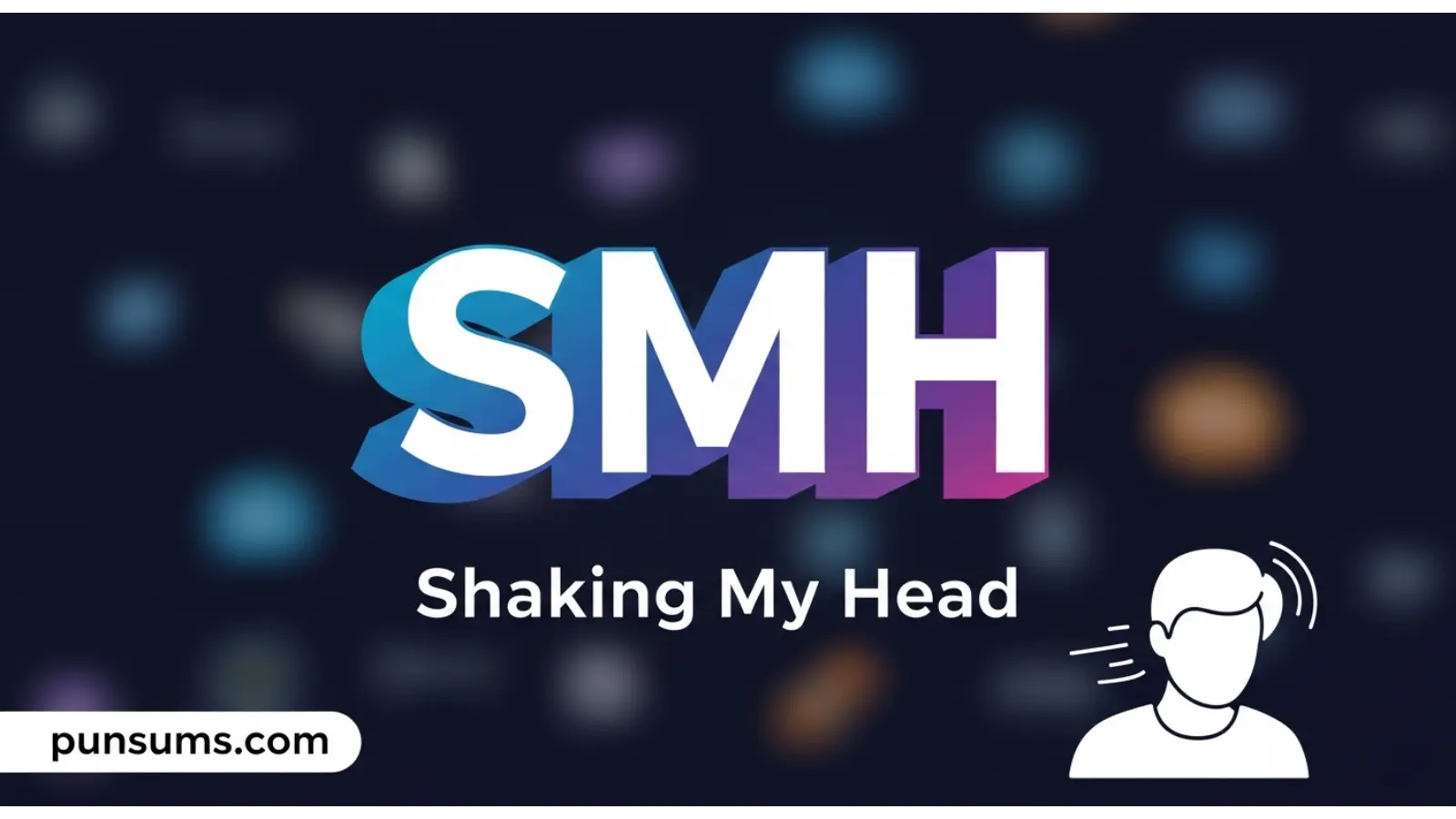
SMH stands for “Shaking My Head.” It is used to express disappointment, frustration, disbelief, embarrassment, or annoyance about a situation, person, or statement.
What Does SMH Mean in Text?
The abbreviation SMH means “Shaking My Head.”
People use it when something seems ridiculous, disappointing, frustrating, or hard to believe. Instead of typing a long response, users simply write “SMH” to show their reaction.
Example:
Friend: “I forgot my wallet at home again.”
You: “SMH.”
In this example, SMH expresses mild disappointment or disbelief.
SMH Full Form
| Abbreviation | Full Form |
|---|---|
| SMH | Shaking My Head |
When people search for “SMH full form” or “what does SMH stand for,” the answer is always Shaking My Head.
The phrase comes from the real-life action of physically shaking your head when something is disappointing or frustrating.
SMH Meaning in Different Contexts
The meaning of SMH can vary slightly depending on the conversation.
1. Disappointment
Used when someone does something foolish or makes a bad decision.
Example:
“She spent all her money on unnecessary things. SMH.”
2. Frustration
Used when a situation becomes annoying.
Example:
“The internet stopped working during my meeting. SMH.”
3. Disbelief
Used when something seems unbelievable.
Example:
“He thought Australia was in Europe. SMH.”
4. Embarrassment
Used when someone acts in a way that causes secondhand embarrassment.
Example:
“Did he really post that online? SMH.”
Is SMH Rude, Offensive, or Neutral?
SMH is generally considered neutral to mildly negative.
Usually Acceptable
- Friends
- Family
- Social media
- Casual conversations
Potentially Rude
- Professional emails
- Workplace communication
- Conversations with people you don’t know well
Because SMH expresses criticism or disappointment, some people may interpret it as dismissive if used excessively.
Where Is SMH Commonly Used?
SMH appears across many digital platforms.
Popular Places to Use SMH
- Text messages
- Instagram comments
- Facebook posts
- TikTok captions
- Snapchat chats
- WhatsApp messages
- Online forums
- Gaming communities
- X (formerly Twitter)
Its short format makes it perfect for quick reactions.
Emotional and Psychological Meaning of SMH
Beyond its literal definition, SMH communicates emotion.
People often use it to express:
- Disappointment
- Frustration
- Irritation
- Shock
- Disbelief
- Mild judgment
- Sympathy mixed with frustration
Instead of writing a detailed emotional response, SMH instantly conveys how someone feels.
Example
“He’s late for work again. SMH.”
The message suggests frustration and disappointment without needing additional explanation.
Origin and Background of SMH
SMH became popular in the early days of internet messaging and online forums.
As texting and social media grew, users started shortening common phrases into abbreviations to save time.
Some popular examples include:
- LOL (Laughing Out Loud)
- BRB (Be Right Back)
- OMG (Oh My God)
- SMH (Shaking My Head)
Over time, SMH became widely recognized across social media platforms and is now part of everyday online language.
Why People Use SMH
There are several reasons why SMH remains popular.
It’s Quick
Typing “SMH” is faster than writing a full explanation.
It Shows Emotion
Readers instantly understand the reaction.
It Fits Social Media
Short responses work well on modern platforms.
It’s Universally Recognized
Many internet users understand its meaning.
Real-Life Conversation Examples
Friendly Example
Friend: “I accidentally wore two different shoes today.”
You: “SMH 😂”
Here, the tone is playful rather than serious.
Casual Example
Person A: “I forgot my password again.”
Person B: “SMH.”
This expresses mild frustration.
Argumentative Example
Person A: “Facts don’t matter.”
Person B: “SMH.”
This shows disagreement and disbelief.
Family Example
Sibling: “I failed because I never studied.”
You: “SMH.”
The response suggests disappointment.
Common Misunderstandings About SMH
Many people misunderstand SMH when they first encounter it.
Misunderstanding 1: It Means Anger
Not necessarily.
SMH usually represents disappointment or disbelief rather than intense anger.
Misunderstanding 2: It’s Always Rude
Not true.
The tone depends on context and relationship.
Misunderstanding 3: It’s an Insult
SMH is generally a reaction, not a direct insult.
Variations and Types of SMH
Internet users often modify SMH for stronger emphasis.
SMFH
SMFH = Shaking My Freaking Head
This version expresses stronger frustration.
SMDH
SMDH = Shaking My Damn Head
Another intensified variation.
SMH My Head
Some people jokingly say:
“SMH my head.”
Technically, this means “Shaking My Head my head,” but it is often used humorously online.
How to Respond When Someone Uses SMH
If someone sends you SMH, consider the context.
If They’re Joking
Respond with humor.
Example:
“I know, I know 😂”
If They’re Frustrated
Acknowledge the situation.
Example:
“Yeah, it was pretty annoying.”
If They’re Disappointed
Clarify or explain.
Example:
“You’re right. I should have handled it better.”
Regional and Cultural Usage
SMH is widely used in:
- United States
- Canada
- United Kingdom
- Australia
- Pakistan
- India
- South Africa
- Other English-speaking online communities
Although English speakers use it most frequently, SMH has spread globally through social media and internet culture.
When to Use SMH
SMH works best in casual settings.
Good Situations
✔ Texting friends
✔ Social media comments
✔ Group chats
✔ Informal online discussions
✔ Memes and jokes
When to Avoid Using SMH
Avoid SMH in professional communication.
Not Recommended For
✘ Business emails
✘ Job applications
✘ Academic papers
✘ Formal customer communication
✘ Serious professional meetings
Using complete sentences is usually better in these situations.
Polite Alternatives to SMH
If you want a softer expression, consider these alternatives.
| Alternative | Meaning |
|---|---|
| That’s unfortunate. | Polite disappointment |
| I can’t believe it. | Mild disbelief |
| That’s disappointing. | Direct but respectful |
| What happened? | Curious response |
| Oh no. | Sympathetic reaction |
These options work better in formal settings.
Comparison Table: SMH vs Similar Slang
| Slang | Meaning | Emotion |
|---|---|---|
| SMH | Shaking My Head | Disappointment, disbelief |
| OMG | Oh My God | Surprise, shock |
| LOL | Laughing Out Loud | Amusement |
| Facepalm | Embarrassment or frustration | Annoyance |
| BRUH | Seriously? | Disbelief |
| WTF | Strong confusion or shock | Surprise, frustration |
This comparison helps explain how SMH differs from other internet slang terms.
Impact of Using Slang in Communication
Slang like SMH can make conversations:
- Faster
- More expressive
- More relatable
- More engaging
However, excessive slang can sometimes create confusion, especially among people unfamiliar with internet abbreviations.
The key is understanding your audience.
Is SMH Safe for Social Media?
Yes, SMH is generally safe for social media.
It is not considered offensive or inappropriate in most situations.
However, because it can imply criticism or judgment, users should be mindful of context and tone.
Using SMH respectfully helps avoid misunderstandings.
Frequently Asked Questions (FAQs)
What does SMH stand for?
SMH stands for Shaking My Head.
What is the SMH meaning slang?
In slang, SMH expresses disappointment, disbelief, frustration, or embarrassment.
Is SMH rude?
Not usually. However, it can sound dismissive depending on the situation and tone.
Can I use SMH in professional emails?
No. It is better to use complete and professional language in formal communication.
What is the difference between SMH and OMG?
SMH shows disappointment or disbelief, while OMG mainly expresses surprise or shock.
Is SMH still popular?
Yes. SMH remains one of the most commonly used internet abbreviations on social media and messaging apps.
Conclusion
Understanding SMH mean in text helps you communicate more effectively in today’s digital world. The SMH full form is “Shaking My Head,” and it is commonly used to express disappointment, frustration, disbelief, or embarrassment.
Whether you see it in a text message, social media comment, or online discussion, SMH usually indicates that someone finds a situation surprising, frustrating, or foolish. While it is perfectly acceptable in casual conversations, it is best avoided in professional settings.
By understanding the context and tone behind SMH, you can use it appropriately and interpret it correctly whenever it appears in online communication.
Read More Posts:

I’m Miles Mirth, a humor-loving writer with a passion for clever puns and cheerful wordplay. I find joy in crafting lines that make people grin, giggle, and groan in delight. For me, laughter is life’s brightest spark, and I love sharing it through my writing. Every pun I create is a little dose of happiness meant to brighten your day.